
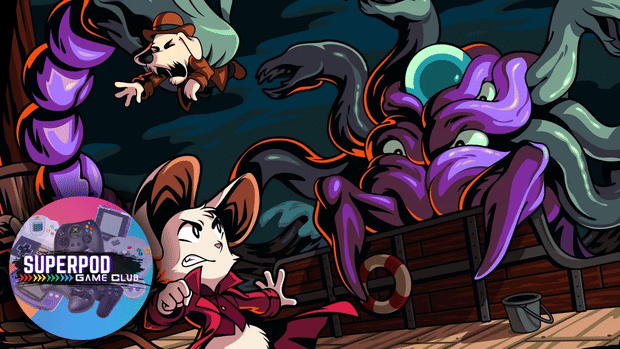
Mina the Hollower | SuperPod Game Club
SuperPod Game Club dug deep into Mina the Hollower!

[Episode 26] This month barSILENCE is waggling our Wii-motes to the music of a few of the Channels on the Nintendo Wii!
In the mid-2000s, the Nintendo Wii system music made sure that every game and non-game on the "little system that could" was a fun time for all ages!
Get ready for a nostalgia-packed, motion-controlled, and chillaxing tour of the music from ten of the best Nintendo Wii Channels, composed by the legendary Kazumi Totaka.
Tune in to these Channels and let’s jam!
Tracklisting:
00:00:00 - Start Wii (Nintendo Wii) [Kazumi Totaka]
00:00:02 - Intro & Nintendo Wii Origins
00:06:06 - Mii Channel Banner (Nintendo Wii) [Kazumi Totaka]
00:06:10 - Mii Channel Medley (Nintendo Wii) [Kazumi Totaka]
00:08:56- Check Mii Out Channel Banner (Nintendo Wii) [Kazumi Totaka]
00:09:07 - Main Menu (Nintendo Wii) [Kazumi Totaka]
00:10:10- Contest Menu (Nintendo Wii) [Kazumi Totaka]
00:11:42 - Contest Winner Parade (Nintendo Wii) [Kazumi Totaka]
00:13:08 - Submission Plaza (Nintendo Wii) [Kazumi Totaka]
00:16:04 - Everybody Votes Channel Banner (Nintendo Wii) [Kazumi Totaka]
00:16:08 - The Results Are In! (Nintendo Wii) [Kazumi Totaka]
00:17:04 - Answering The Question (Nintendo Wii) [Kazumi Totaka]
00:18:43 - Vote Results (Nintendo Wii) [Kazumi Totaka]
00:21:16 - Wii U Transfer Tool (Nintendo Wii) [Kazumi Totaka]
00:21:17 - Transfer Tool Menus (Nintendo Wii) [Kazumi Totaka]
00:23:17 - Photo List (Nintendo Wii) [Kazumi Totaka]
00:25:52 - Slideshow (Scenic) (Nintendo Wii) [Kazumi Totaka]
00:31:36 - Wii Channels & Kazumi Totaka
00:36:32 - Food Delivery Channel Banner (Nintendo Wii) [Kazumi Totaka]
00:36:37 - Main Theme (Nintendo Wii) [Kazumi Totaka]
00:40:03 - Ordering Party Food (Nintendo Wii) [Kazumi Totaka]
00:42:41 - Ordering All Food (Nintendo Wii) [Kazumi Totaka]
00:44:49 - Ordering Fast Food (Nintendo Wii) [Kazumi Totaka]
00:47:08 - Confirmation (Nintendo Wii) [Kazumi Totaka]
00:50:32 - Forecast Channel Banner (Nintendo Wii) [Kazumi Totaka]
00:50:37 - Local Forecast (Daytime) (Nintendo Wii) [Kazumi Totaka]
00:52:56 - Wii Speak Channel Banner (Nintendo Wii) [Kazumi Totaka]
00:53:18 - Speaker Room (Nintendo Wii) [Kazumi Totaka]
00:54:53 - News Channel Banner (Nintendo Wii) [Kazumi Totaka]
00:54:57 - Global News View (Nintendo Wii) [Kazumi Totaka]
00:58:22 - Slideshow (Daytime) [Kazumi Totaka]
01:02:39 - Outro
01:04:42 - Wii Shop Channel Banner (Nintendo Wii) [Kazumi Totaka]
01:05:04 - Wii Shop Channel (Nintendo Wii) [Kazumi Totaka]
barSILENCE is a podcast that is created to celebrate and explore the best video game music in the world! You’re here because you enjoy the same thing that I do, and I am grateful for that.
If you want to become a member of the Legion of VGM, consider subscribing to the show on Patreon! As a thank you for subscribing, you can access all 20 episodes of the exclusive Bonus Beats podcast! Click here to learn more!
If you want to consider a one-time donation, check out the Ko-Fi
Shout-outs to two fantastic friends of the show and members of the Legion of VGM:
Shujin Academy VGM Club: The creatively themed episodes of this video game music podcast are the brainchild of the venerable Professor Tom. Please listen to and follow this excellent VGM Podcast!
SuperPod Saga: This fantastic video game variety podcast, hosted by Aaron, is a show on a mission to discuss every video game topic ever! Give it a listen and follow for weekly episodes!
Chillscape: This is a brand new chilled-out video game music podcast that is also hosted by Aaron!
Connect with the show!
Patreon - /barSILENCE
Ko-Fi - @barsilencevgm
BlueSky - @barsilencevgm.bsky.social
Instagram - @barSILENCE
Threads - @barSILENCE
More ways to listen:
Listen on the website - barsilence.com
SuperPod Network - Video Game Podcast Network
8Beats Radio - 24/7 VGM Music & Mixes
Terra Player App - VGM & Gaming Podcasts & More
YouTube - Podcast Videos
[00:00:00] Alright, welcome back and thanks for tuning in to another episode of BarSILENCE.
[00:00:09] My name is Jameson and I'm your host.
[00:00:11] BarSILENCE is a show that's dedicated to exploring the very best video game music
[00:00:15] from past and present each and every month.
[00:00:17] If you haven't yet, head over to BarSILENCE.com to find an easy link to subscribe on whatever
[00:00:21] your favorite podcatcher is.
[00:00:23] And if you're looking for the best 24-7 video game music radio station on the planet,
[00:00:27] check out 8 Beads Radio.
[00:00:29] This show plays there live on the first Tuesday of every month and you can tune in by going
[00:00:33] to 8beads.co.
[00:00:35] You can also listen to this show on terrorplayer.com, which is the premier location to hear a great
[00:00:40] variety of video game music and entertainment podcasts from some of the best creators
[00:00:43] on the internet.
[00:00:45] In this episode, we're going to be listening to something a little bit different this
[00:00:49] time.
[00:00:50] Instead of a soundtrack to a specific game, we're actually going to be listening
[00:00:52] to the music of the Nintendo Wii console.
[00:00:55] The idea of a soundtrack that plays within the system itself is definitely becoming
[00:00:58] a relic of the past, but it's also one of those classic examples of Nintendo's hyper
[00:01:03] level of detail and care that they put into crafting a fun experience for gamers.
[00:01:08] When looking back at the system, the Wii actually marks an interesting reset point
[00:01:11] for Nintendo as they were forced to reconsider who they were in the market and what the
[00:01:16] meaning of their efforts would become.
[00:01:18] And there's a reason for that too.
[00:01:20] Shortly after the release of the Nintendo GameCube in 2001, Nintendo began developing
[00:01:24] their next console.
[00:01:26] And unlike their peers, Nintendo decided, somewhat controversially, not to focus on the graphics
[00:01:30] and power of the hardware, and instead focus their efforts on creating unique and interesting
[00:01:34] gameplay concepts.
[00:01:36] The choice for industry veteran Nintendo to refocus this energy against its hot selling
[00:01:40] and much larger corporate competition was a huge risk too.
[00:01:44] Because at the time, the GameCube was definitely not selling anywhere near as well as Sony's
[00:01:48] Titan PlayStation 2 and was starting to fall behind Microsoft's new system,
[00:01:51] the original Xbox.
[00:01:53] In the face of this battle for gamers' attention, all three systems arguably felt very samey,
[00:01:58] offering only minor differences between what the three of them could produce graphically.
[00:02:03] But when Sataro Owada became president of Nintendo in 2002, he recognized that Nintendo
[00:02:07] was starting to fall behind in not only how their current system was performing, but
[00:02:11] also in terms of variety of games that were being released.
[00:02:14] In the gaming media world, Nintendo was noted for ignoring the potential of online
[00:02:18] gaming and Nintendo themselves even felt that gaming was becoming too exclusive from
[00:02:22] larger audiences by focusing on increasingly complex gameplay styles and genres that were
[00:02:26] not really broad reaching in terms of demographics.
[00:02:29] Owada's approach for this new console was to make hardware and software that could appeal
[00:02:33] to all people, thus defining Nintendo's play separately from the competition and
[00:02:37] placing them as an innovator and experience maker that they're still championed
[00:02:41] for even today.
[00:02:43] In 2003, Shigeru Omayamoto was tasked with going off the tech roadmap and spearheading
[00:02:48] development of a new type of controller that utilized motion-sensing technology,
[00:02:52] focusing on simplifying the gaming interface and making it approachable to many more people.
[00:02:56] Within just six months, the first prototypes were developed and by early 2004,
[00:03:00] Nintendo was starting to reveal some details of their upcoming console which was
[00:03:04] referred to by its codename, Revolution.
[00:03:07] This excitingly named and interesting concept that Nintendo was working on
[00:03:10] wasn't showcased until the E3 Expo in 2005.
[00:03:13] Here, Nintendo revealed that they had a new control system in mind and that this
[00:03:17] system was going to be able to play all GameCube games thanks to it having four
[00:03:20] of that system's control reports and two memory card slots on top.
[00:03:24] Additionally, they introduced their secret weapon which later evolved into the
[00:03:27] virtual console. This innovative idea would make the Wii a
[00:03:31] super backwards compatible system that would provide gamers access to
[00:03:34] Nintendo's extensive library spanning back to the NES era.
[00:03:38] It wasn't until E3 a year later when Nintendo first announced the name
[00:03:42] Wii, which of course was met with jokes and various forms of crude humor online.
[00:03:47] The meaning of the system's name though actually comes from the word Wii,
[00:03:50] as in multiple people, and it was meant to represent that this system was for everyone.
[00:03:54] And it was.
[00:03:56] The Nintendo Wii was released at $250, making it not only more affordable than the
[00:04:01] PlayStation 3 and Xbox 360, it also came with the added benefit of a pack-in game
[00:04:06] that excellently gave owners a demo into what the system could do with Wii Sports.
[00:04:10] But let's get back to the music and talk about the songs we're going to hear in our next block.
[00:04:14] First up is going to be one of the most iconic set of tunes from the Mi Channel.
[00:04:18] This music should immediately be recognizable to anyone who's ever created a Mi character.
[00:04:22] I've mixed together the version of the Mi Channel song that plays while you're creating
[00:04:25] your character, which then will flow right into the parade version that plays when all
[00:04:29] of your Mi's would march together on screen. Then after that we'll listen to four songs
[00:04:33] from the Check Mi Out channel. This channel allowed players to share their Mi's and
[00:04:37] enter them into popularity contests for others around the world to see.
[00:04:40] This was also an excellent location to see the often strange collection of lookalike celebrities,
[00:04:45] grotesque monsters and recreations of other pop culture characters,
[00:04:48] as well as anything else that the creative minds of gamers could come up with.
[00:04:51] For this set we're going to listen to Main Menu, then Contest Menu,
[00:04:55] followed by Contest Winner Parade, and then we'll hear the submission plaza parade version.
[00:04:59] After that we're going to listen to a few songs from the Everybody Votes channel.
[00:05:03] I would regularly tune into this channel just to see the weird opinion polls that were
[00:05:06] being asked. I used to love seeing either how far off my answers were from everyone else's,
[00:05:11] or just how close I could actually get by trying to guess the most popular one.
[00:05:15] For this set we're going to hear three tracks called The Results Are In,
[00:05:18] Answering the Question, and Vote Results. After that we'll listen to the Transfer Tool menu
[00:05:23] song that comes from the Wii U Transfer Tool channel. This soothing track plays while you
[00:05:28] wait for your content to be sent over to your shiny new Wii U, if you were one of the
[00:05:32] people that had one. Last for this block we're going to listen to a couple of songs
[00:05:36] from the photo channel that allowed users to insert their SD cards into the console and
[00:05:40] look at their photos and videos on the TV. There was a built-in editor, slideshow maker,
[00:05:44] and a variety of other options including puzzles that you could solve that were made from your
[00:05:48] photos. We'll hear the dreamy photo list song, then finish our block with the atmospheric jam
[00:05:53] called Slideshow, Scenic. Alright let's waggle our Wii modes through these tunes
[00:05:57] and I'll be back after that to talk a little bit more about the Nintendo Wii.
[00:31:36] The Nintendo Wii main user interface was controlled by using the Wii mode and pointing it at your TV
[00:31:45] screen. With an on-screen cursor like a mouse you could select through menus to pick different
[00:31:50] applications that Nintendo referred to as channels. The interface and operating system of the Nintendo
[00:31:55] Wii was really unique compared to its peers at the time, and notably was given the care equal
[00:32:00] to or at least just as important as the games themselves were. So much so that the incredibly
[00:32:05] relaxing and at times upbeat tunes that play while you navigate your way through different parts of
[00:32:09] the user interface all had music of its own, giving each area within the console its own feeling
[00:32:14] and making even the non-games feel fun. The channel system for the Wii was interesting too,
[00:32:19] because when the system was released in 2006 it came out just a few months before Apple
[00:32:23] first revealed the iPhone to the world. At the time the idea of tiling applications in a
[00:32:28] grid on screen wasn't especially common, so seeing that Nintendo was able to develop
[00:32:32] a forward-thinking solution to their interface that maximized the user experience with their new
[00:32:36] controllers is something that should definitely be praiseworthy in retrospect. Now another thing
[00:32:41] that's interesting about the channel system is that across all regions the Wii had over 30
[00:32:45] different channels that you could download and use that were made by Nintendo. The standard
[00:32:49] channels built into the Wii included a disc channel for your games, channels for me's like
[00:32:53] the main me channel as well as check me out, and there were also channels for photos,
[00:32:57] the weather, the news, as well as interactive fun like the everybody votes channel,
[00:33:02] Wii speak and one for searching the internet. Of course there were also channels for games
[00:33:06] like the Wii shop channel and the virtual console, as well as what was known as Wiiware,
[00:33:10] which was Nintendo's version of the Xbox Live arcade for smaller launches of indie games
[00:33:15] designed specifically for the Wii. There were also channels that were exclusive to Japan like
[00:33:19] the Jijicam print channel for printing photos, Wino Ma which featured celebrity me's and
[00:33:23] special programming that took place in a virtual living room, and the food delivery
[00:33:27] channel which allowed users to order food online that would then be delivered to them door
[00:33:31] to esch-tile four years before that was even invented. There were even channels for streaming
[00:33:35] video on the Wii which was becoming increasingly popular during the system's lifetime.
[00:33:40] There were channels for Hulu, Netflix, Crunchyroll and even a version of the BBC iPlayer.
[00:33:45] All of these channels really gave Nintendo a sense of being the little system that could
[00:33:49] in the sense that it was rooted in the promise of the near future. One could argue that it
[00:33:53] was a really effective way of testing out concepts that have gone on to become smart TVs and devices
[00:33:58] like the iPad for home media consumption. Now, the one thing we haven't talked about yet is who made
[00:34:03] all of these iconic songs for these channels. From what I can find online, all of the music
[00:34:07] was composed by none other than Kazumi Totaka, the mind behind soundtracks like Super Mario Land 2
[00:34:12] on the Game Boy, Virtual Boy Wario Land, Wave Race 64, Yoshi's Story, as well as having
[00:34:18] credits on the Mario Artist series, Animal Crossing, Luigi's Mansion and Wii Sports
[00:34:22] just to name a few. His contribution to the Nintendo Wii helped to define many of the channel's
[00:34:27] personalities, arguably burning them into the hearts and minds of gamers for generations.
[00:34:32] Totaka also has credits for voice acting characters like Yoshi, Professor E. Gadd from Luigi's
[00:34:36] Mansion, Captain Alomar from Pikmin, as well as K.K. Slider from Animal Crossing. I'd say
[00:34:42] that one of his most interesting tidbits though is what's known as Totaka's song.
[00:34:46] It's a super short 19 note tune that's hidden in almost every game that he's worked on.
[00:34:51] If you haven't heard it yet, it sounds like this version from Super Mario Land 2 on the Game Boy.
[00:35:07] As of right now, there are 14 versions of the song that have been found and people are still
[00:35:11] looking for it in a handful of other games that he has credits on. It's a pretty fun VGM mystery
[00:35:16] and I love that he had the foresight to hide something like this in his games.
[00:35:20] Anyway, let's get into our final block of tunes and talk a little bit about the music we're gonna
[00:35:23] hear. Like the last block, we're gonna listen to these in sets based on the channels that the
[00:35:27] songs come from. Up first, we're gonna listen to the music from the Japanese only channel
[00:35:31] called Food Delivery. We'll hear main theme, ordering party food, ordering all food, ordering
[00:35:37] fast food, and then confirmation. Then after that we'll listen to local forecast,
[00:35:42] daytime from the forecast channel. This relaxing jam perfectly matches the experience of checking in
[00:35:47] on the weather for the week as well as rotating a globe on screen to see what the weather was across
[00:35:51] the world. We'll follow that with the track called Speaker Room from the We Speak channel.
[00:35:55] The We Speak was a microphone accessory that launched in 2008 with its own channel,
[00:35:59] allowing users to host voice chats with each other while me's on screen mimic their
[00:36:03] mouth movements, which was pretty cool for a limited use accessory. Then last in this block,
[00:36:08] we'll listen to two tracks from the We News channel. This channel allowed users to read
[00:36:12] headline news and even let you rotate a globe similar to the forecast channel to see news from
[00:36:16] all over the world. We'll listen to global news view first, and then hear the fantastically cool
[00:36:21] and grooving slideshow daytime to end the block. Alright, let's get into some of these We
[00:36:26] Rific tunes and I'll be back after that.
[01:02:26] Alright, so that's the show. Hopefully you guys have enjoyed this episode about the infectiously
[01:02:48] upbeat and memorable Nintendo Wii channel music. If you want to interact with the show and tell
[01:02:53] me what you think about my selections in this episode, you can follow me on a variety of social
[01:02:57] media platforms. This includes Instagram, Twitter, Threads and Blue Sky. Following the show in those
[01:03:03] locations are exactly where you can find great screenshots, artwork, music clips,
[01:03:07] and various information about the games featured in each episode. Check the show
[01:03:11] notes to follow along on your favorite platformer choice. If you're enjoying this show's
[01:03:15] selection of incredibly great video game music each month, please consider taking
[01:03:18] a moment to leave a rating and review on Apple Podcasts, Spotify, YouTube, or wherever you're
[01:03:23] listening to this show because I'd really love to hear what you think. Don't forget,
[01:03:28] you can go to BarSilence.com to listen to past shows if you missed any,
[01:03:31] and of course, if you're feeling giving, you can always support BarSilence on Patreon.
[01:03:36] For already subscribing, I want to thank the members of the Legion of EGM for supporting
[01:03:39] the show. Zoe, Alusa and Cameron, I truly appreciate you Wii-tastic friends and
[01:03:45] I really hope you've enjoyed this episode. If you want to join this team of cool cats and
[01:03:49] become a member of the Legion of EGM yourself, you can subscribe for as little or as much as you
[01:03:54] want and you'll get access to a bonus episode of awesome music each month. Be sure to check
[01:03:59] the show notes for a link to learn more. I would also like to thank friends of the show
[01:04:03] and Legion members, Aaron of the excellent video game variety podcast Super Pod Saga,
[01:04:08] as well as Professor Tom of the ShoeGen Academy VGM Club. You can and should check out
[01:04:13] both of these shows wherever you find podcasts as well as on Terraplayer.
[01:04:17] Alright, so to wrap up this show I've got a final set of tunes for us, but you might be thinking,
[01:04:23] Jameson, why didn't you play the Wii Shop theme yet? And that might be because I wanted to save
[01:04:28] the best for last. We're going to close out this episode with the short but sweet
[01:04:31] Wii Shop Channel banner and then take us home with the beloved Wii Shop Channel theme.
[01:04:36] So enjoy this final set and as always, thanks again for listening and I'll see you guys next time.
Help us keep the site AD-FREE by donating as little as $1💸

On this episode of Geek Addicts Bill and Matt return to discuss the 2004 anime film Yu-Gi-Oh! The Movie: Pyramid of Light based off of the series of the same name! Follow all things G&C Podcast Networ...
[Episode 47] This month, barSILENCE is exploring the dynamic soundtrack of Tetris Effect by Hydelic. Tetsuya Mizuguchi's reimagining of one of gaming's most recognizable puzzle games transforms Tetr...
This week on ETG Podcast: - Spider-Man #brandnewday is leaked online - #nintendo might be trying to take on #gta6 in November with the Ocarina remake. - Stellar Blade: Bloodrain releases cringe AI slo...
Aaron, Gerry, and Thrak chat about their favorite hidden gems on Sega Genesis. Featuring games like Gaiares, Sunset Riders, and Decap Attack. This episode is sponsored by "Repro-Kartz", the #1 provide...
You might have seen or played Kabuki: Quantum Fighter, but do you know what the original Japanese release was spun off from? This week we whip our hair back and forth explaining about this hidden NES ...
This time I am joined by Youtuber Shnickerman to discuss Sledgehammer's return to the beginning of the series with Call of Duty: WWII. Follow me on Social Media! https://bsky.app/profile/thrak.bsky.so...
Top-down racers aren't a common sight on Neo Geo, so how does Thrash Rally fare? The guys dare to find out. Catch us online at https://neogeogo.show ★ Buy Us a Coffee ★ Follow us on Bluesky! Podcast:...
On this episode of the Gaming And Collecting Podcast Bill and Alex return to talk about the Super Mario Galaxy Movie, giving there thoughts on it. Follow the Gaming And Collecting Podcast on all of ou...
Andre and Steve are back at the Summer RPG Anime Festival with Princess Minerva, the aggressively horny OAV prequel to the aggressively horny RPG on PC-98, PC Engine CD, and Super Famicom. We didn't g...
SuperPod Game Club dug deep into Mina the Hollower!
SuperPod Game Club tried Earthworm Jim 3D
Bill is a huge fan of The Sims on GBA. Read and see why!