
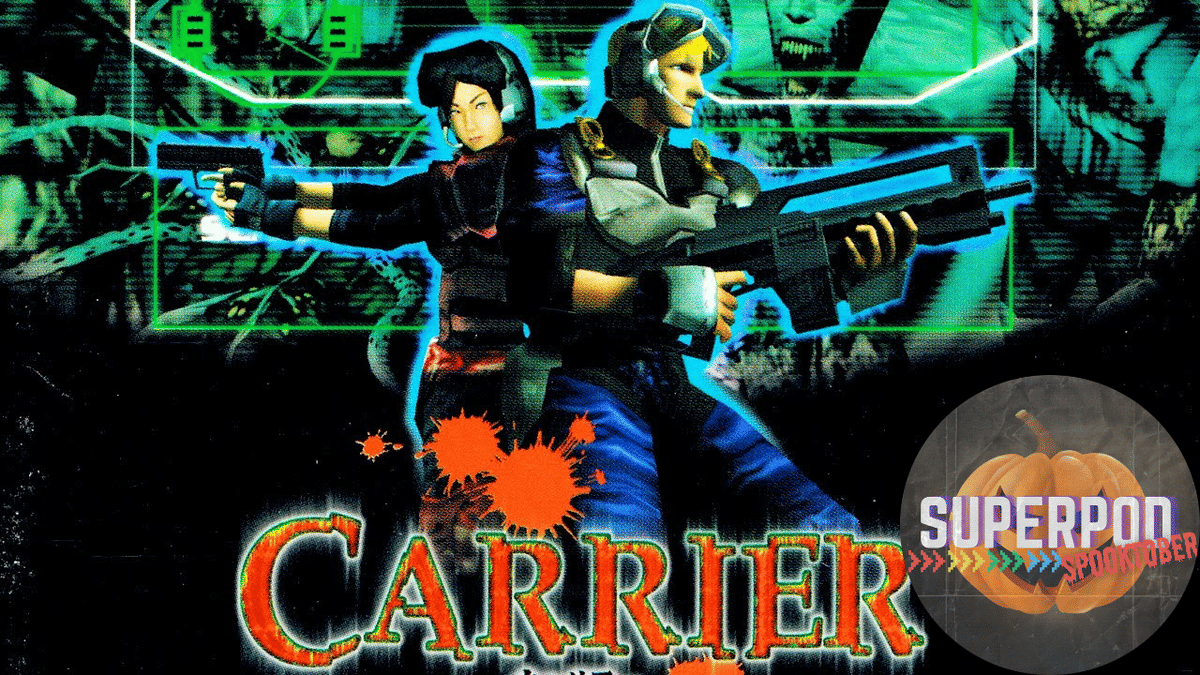
The NTA investigation team known as SPARC is sent to investigate the Aircraft Carrier Heimdal, little do they know of the strange horrors that await them inside.
Throughout its rather short lifespan, the Sega Dreamcast saw a surprisingly large amount of survival horror titles released on the console. With some known titles such as Resident Evil: Code Veronica and Alone in the Dark: The New Nightmare, or with cult classics such as Blue Stinger or Illbleed. But one game that tends to be overlooked is the somewhat obscure title Carrier, which waws released in 2000 exclusively for the Dreamcast, and developed and published by Jaleco, the Japanse studio responsible for a number of games from 1974 up until their closure in 2014. So why did Carrier not quite gain the cult status of its contemporaries? Let's find out.
In a basic sense, Carrier is a survival-horror game similar to Resident Evil and Alone in the Dark, notably featuring fully 3D rendered graphics for both the characters and environments, rather than the more traditional mix of 3D and pre-rendered backgrounds. With players taking control of Jack Ingles (and later Jessifer Manning) members of the investigation team who were split up at the start of the game. With the game taking place solely on the aircraft carrier Heimdal, which admittedly greatly adds to the horror aspect of the game leaving the player trapped on a ship somewhere in the pacific ocean.
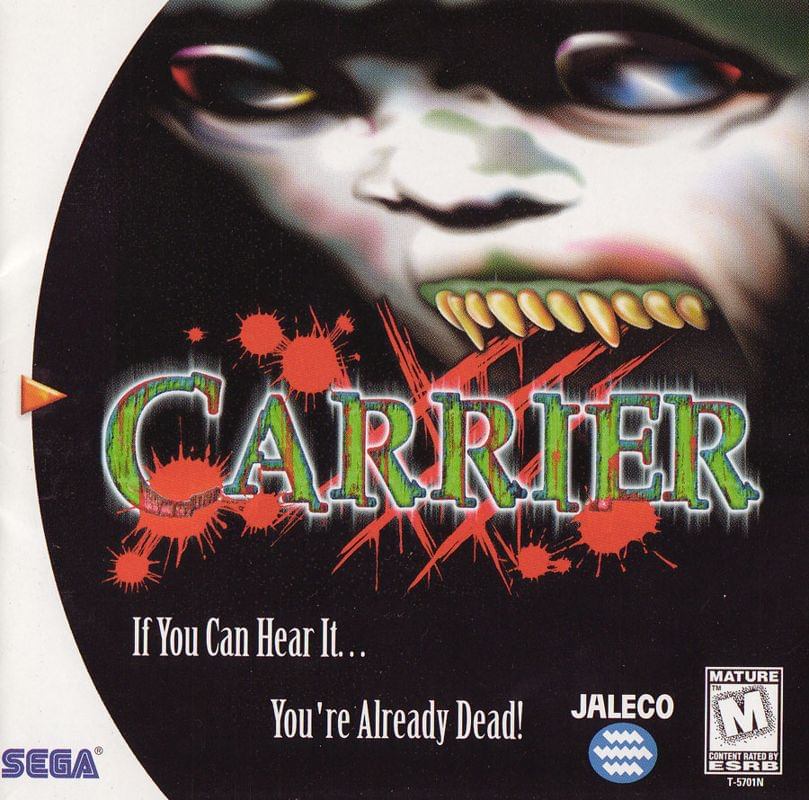
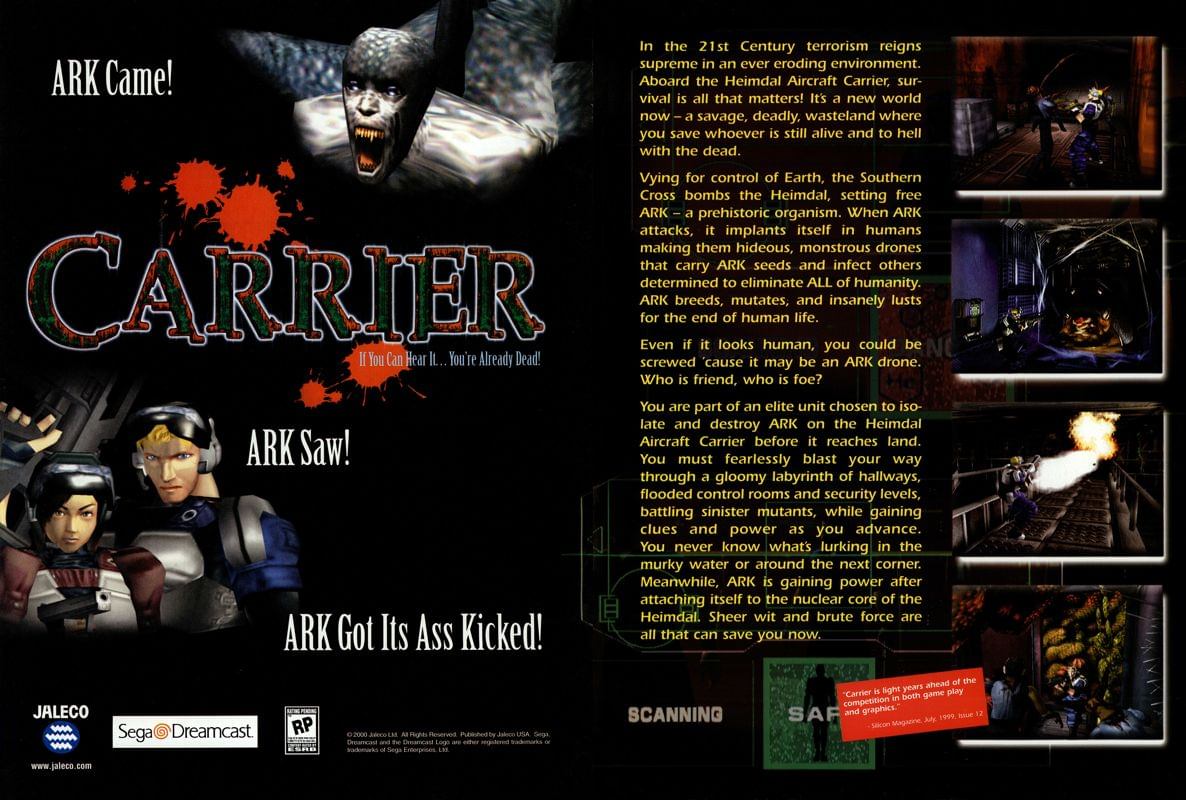
Story-wise the game is fairly standard for survival horror games with much of its background being up to the player to discover, with the game mostly being set around the main investigation team and there survival/escape from the Heimdal. The main antagonist is ARK, a mysterious plant-like organism that has infected much of the Heimdal's crew and previous investigation team members, turning them into zombie like mutants that the player must deal with throughout the game. The game features a structure similar to Resident Evil 2, with the player first staring out with Jack Ingles for there initial playthrough, later unlocking a second story following Jessifer Manning which features a completely unique perspective of the games story.
Carrier is played from a third-person perspective, as players must traverse the Heimdal to survive defeating ARK infected mutants and solve standard survival-horror puzzles. A big aspect of the game is ammo and heath conservation, as the game utilizes a Resident Evil 2 style zapping mechanic which carries over which items you picked up in Jack's playthrough into Jessifer's. This gives the game a bit of a strategic element to its design (something that is never explained in game by the way), making players choose wisely in their initial playthrough to avoid running into issue upon the second.
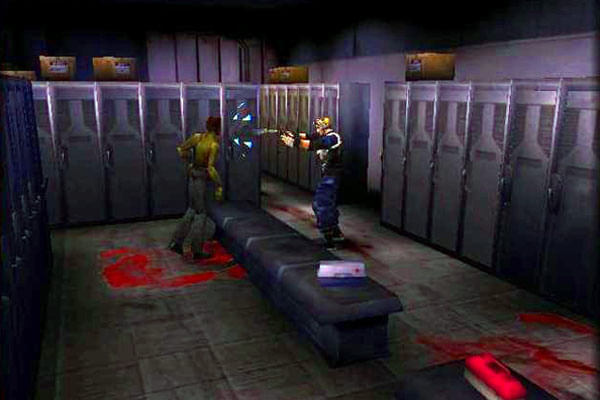
Now let's talk about why this game is kind of on the average side overall. Carrier has a lot of problems that keep it from being a truly great game. Starting off with a few minor complaints, the game is a bit on the rough side in terms of control (which to be fair isn't uncommon with survival horror games of the era). Although the bigger issue is by far the game's environmental design, which starts off somewhat interesting, but quickly becomes very repetitive with a lot of tedious backtracking, which makes the game more of a slog to play than anything. Another downside is the game's overall performance, with the game suffering from slowdown at times, especially during boss battles or other graphically intensive moments.
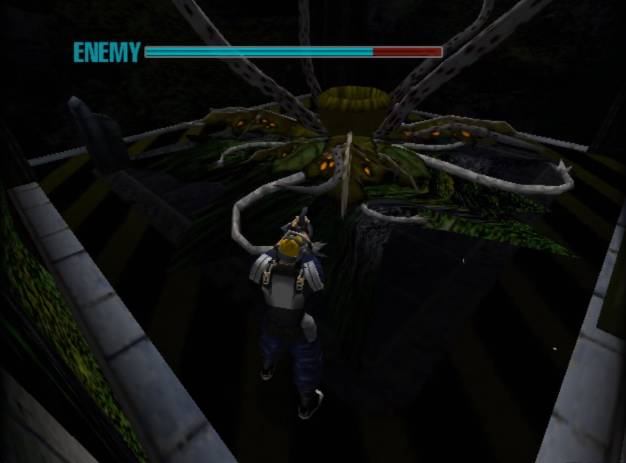
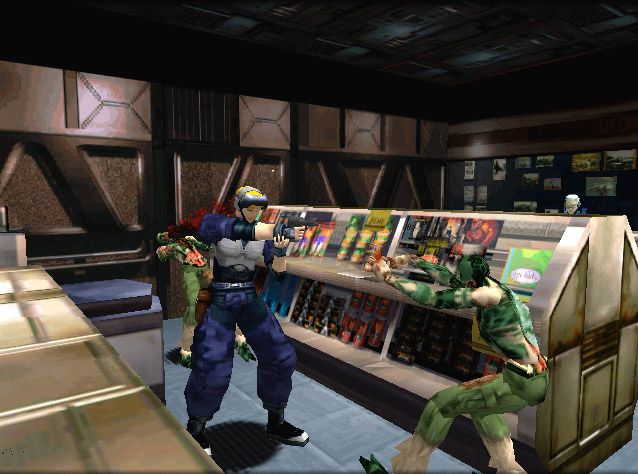
While far from perfect and generally mediocre, Carrier is an interesting survival-horror game that has some good ideas that are held back by poor design choices. If you are a fan of the Dreamcast or survival-horror games in general, Carrier might be a game worth checking out, although be warned this one definitely shows its age and is very rough around the edges.
on an interesting final note, the game actually had a sequel planned at one point titled "Carrier: The Next Mutation", intended for a 2001 release on the PlayStation 2, although it was canceled for unknown reasons.