

Mina the Hollower | SuperPod Game Club
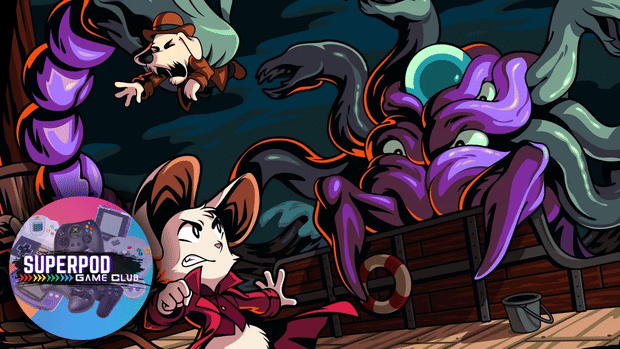
SuperPod Game Club dug deep into Mina the Hollower!

Jake and Cameron sit down with the Dan Beckerton, creator of Spirittea, for a follow up interview!
Support Dan on Twitter/X: https://twitter.com/cheesemaster_pr
Buy Spirittea on Steam
Sign up for the Digital Deluxe Edition of the podcast on Patreon!: https://www.patreon.com/preordercast?fan_landing=true
► Join our Discord Server! https://discord.gg/rgmEEUrB2m
► The Pre-Order Cast GG App https://ggapp.io/preordercast/lists/most-anticipated-games-of-2023-LWclmE0B
► Show Twitter https://twitter.com/preordercast
► Jake's Twitter https://twitter.com/jacob_chipdip18
► Cameron's Twitter https://twitter.com/masssgeneric
[00:00:00] Ladies and gentlemen, welcome back to another episode of the Pre-Order Bonus podcast. Welcome in for a special episode where we are here chatting with Dan Beckerton from Cheese Master Games. We haven't talked with Dan since February 2021 and since then he has released Spirit
[00:00:26] T. It's out now on Game Pass on Steam. Dan, how you doing? I'm good. Yeah. Thanks for having me back on the show. Well, that's awesome. Jake is also here as you all know. You already know that Jake is here,
[00:00:40] of course. Well, Dan, you've released a video game now. It's been several months since Spirit T has been out. It's on Game Pass. Jake and I have both played it. Thousands of other people have also
[00:00:52] played it. How does it feel to have a video game out on Game Pass in the wild? This thing that you've been working on for so many years now. Yeah, it feels good, but also somehow incomplete
[00:01:05] still because there's so much I want to do still with the game. So it feels like people are playing it, but maybe not even playing the experience that I envisioned yet. Interesting. Yeah. So it's
[00:01:20] kind of like it's out, but it's not like I'm dusting my hands and being like, okay, that was a good job well done. It's like, okay, they're playing it, but now I gotta add the last
[00:01:30] few things sort of thing. So does that mean you're working on updates then right now? You're like hard at work. Okay. Well, I wouldn't say hard to work right now, but I'm like a little of a
[00:01:40] move. Okay. Korea. So that's, I literally stole my desk this morning. I'm sitting in my kitchen table right now. You're moving to Korea. Yeah, yeah. Back to Korea, right? To Canada. Yeah.
[00:01:57] It's funny. I kind of like started the whole like game dev journey in Korea just like learning how to make games. And then I came to Canada released like my first like pretty extremely novice game Fables of Talimos. And then my time in Canada was basically
[00:02:16] like spirit tea time. And then now that it's done, it's like back to Korea. Interesting. Man. So I'm super curious about this right? So you feel like you're not quite done
[00:02:27] with spirit tea. There are other things there that you want to sort of add to sort of complete the experience. This is so interesting to me because I feel like with a lot of indie games
[00:02:38] that this is, I don't know if this is a current trend or maybe I'm finally catching on. But when you are like planning that sort of launch date and releasing the 1.0 version of the game,
[00:02:48] do you ever have the feeling like, okay, this is it? I'm done or do you always or did you sort of feel like with spirit tea that like, okay, this is 1.0, but I know that there's more that has to
[00:02:58] get out here. No, it's like, I don't know if it's just this genre of game with the life sim type or whatever, but it was definitely not a case of like, oh man, I'm going to have a sweet
[00:03:09] party launching this game and just be like relaxing for weeks. It's more like there's like a list of stuff that it's like we couldn't fit it in before launch, it's coming post launch sort of thing. So it's like, you know, we still got loads of stuff to do.
[00:03:26] So it's not, it's not nearly as exciting as it probably could appear to maybe, maybe for some people, like if you do a really compact, like I don't know, side scroll or something where it's like, there are only so many levels and so many bosses and
[00:03:40] then it's like that's the experience. So you can maybe you can feel more fulfilled and like complete when you launch, but not for this game, unfortunately. How do you, how did you decide then what would be the 1.0 launch? Like what would be in that package?
[00:04:00] Well, it was definitely like very much a discussion with like my publisher, No More Robots about like launch date and stuff like that. It's a weird thing because it's like you can't work on it forever or
[00:04:17] you're never sure if it's going to make back what it costs to make sort of thing, but you do have to draw a line at some point and be like, okay, like this has got to come out at some point, let's try this date sort of thing.
[00:04:30] My, I think my Kickstarter had like a promise of like an early access launch, I think in 2022, I believe was the original goal. But then when I signed on with the publisher, they're like, let's go for a full launch maybe a little bit later in that year.
[00:04:51] And then I think some of my earlier trailers were saying like like January 2023 was the goal. And then it got pushed to like April and then it got pushed to like October and then finally November. And it's just like, yeah, that last 10% really
[00:05:08] takes the longest for sure. They don't, they're not kidding when they say that. Oh, interesting. Yeah, good to know. That delay, did you have like control over that product? Like whatever you're allowed
[00:05:18] to say here, maybe you're not just curious, like how much control did you have over that process? Like could you have delayed the game another year or was it like, okay, I'm going to work with the publisher and buy as much time as I possibly can here.
[00:05:31] Yeah, I probably could have. I also just wanted the game to come out too. Right. Every time they delayed it, I like hurt. I got to delay this like launch because it's like,
[00:05:45] maybe we didn't quite know we were going to move to Korea back then, but it felt like my life was just literally just working on this game and it was on hold. And like, once this game comes out, I can resume my life sort of thing.
[00:05:58] So every delay hurt. But then again, if we had launched January 2023, it would have been a disaster. There'd been so many bugs and so many unfinished things. So it was a necessary, yeah, necessary suffering.
[00:06:13] And how did you determine that timeline? How did you go like, okay, it needs three months and that's going to be satisfactory set the date? Or was it sort of just your best guess?
[00:06:23] Well, yeah. As you could probably guess from what I said, we were like, January is good. And then get January comes like, oh, maybe we need a few months, April. And then, okay, later in the summer, October, November. I think the October to November delay was just
[00:06:35] because games launching around the same time. We didn't want to overlap with them. So, yeah, but I told them like, this is not launching in 2024. I don't care. We're getting it out of here. And they're like, we also cannot handle it if it comes out in 2024.
[00:06:52] Like, we also want to be done with it too. So, so pretty mutual you and the publisher coming to an agreement like, let's get this game out. Yeah, definitely. The one goal, yeah, the summer we knew the baby was coming in July. I just
[00:07:07] had a baby in July. And I remember the one that we were really, I'll thank you, we were really pushing for was like, before the baby comes, get the game out. And that was tricky trying to launch a game with like just a few month old baby.
[00:07:23] Oh boy. It's like, bouncing plates on your head while you're juggling and bounce a basketball at the same time. Exactly. I remember some interview with like the, or some talk from the Diablo developer,
[00:07:40] like the, I don't remember which one it is. One of the glasses and like the little kind of graying beard way back. This is a pretty old talk, but he was talking about how like they were trying
[00:07:48] to launch Diablo one. And his wife was in labor. And he was like, trying to like crunch the game out in time before the baby came sort of thing, which like sounds stressful. But honestly,
[00:08:00] I feel like if you get the game out before the baby, it's easier than having a couple month old baby and trying to launch a game. Dan, this is, this is, you shouldn't do that. That sounds like game development's already hard enough. I mean, come on.
[00:08:15] This is very, very real life. I feel like probably like Dark Souls last time. So this is just, I thought I'd try Dark Souls in real life. Real life. Yeah. Oh my goodness. Yeah. Dark Souls in real life is definitely having a baby
[00:08:29] where you're trying to do everything but without sleep, right? Yeah. Yeah. Managing someone else's, you know, who can't really do much for themselves. You love them dearly, but you're barely hanging on, right? Yeah, definitely. Oh man. Yeah. I mean, that is super cool. I mean,
[00:08:48] thanks for sharing that with us sort of conversation about how that kind of delay happens because I think a lot of us on the other side of the game industry, those of us who don't develop games, but we play games, we see a delay and we just think,
[00:09:00] oh man, what was that for? And this leads me sort of to my question. I mean, you, this was largely, would you consider this a solo dev effort? I know you're working with a publisher,
[00:09:11] but so when a baby comes, you can't just offload a ton of this work to somebody else. Yeah. Yeah, no. It's like, oh, we got a bunch of bugs we need to fix. Can you send us a build?
[00:09:22] It's not, it's like, I'm the only person that can fix those bugs and make a new build and send it to the publisher sort of thing, you know? So it's like, yeah, it was like,
[00:09:31] I feel like there was like a big sense of pride in earlier on when I was like, oh, I want to make this game by myself. But then I hired a, I got some music contracted out
[00:09:43] from David Linareas who did a really good job. But yeah, it's definitely comes with its own challenges. And like that's the thing. I think my publisher said, or my producer, she was saying like, there's like a triangle in game development. It's like
[00:09:58] the game you can put more money into the into the game, more time or manpower. And you have to choose a balance of like what can you put into it? And for me, it was like, well, manpower we can't,
[00:10:12] all we can really do and money is like not really much of an issue when it's just one person you're paying basically. So it was just time. And that's why the only like,
[00:10:21] we know it's going to get delayed, but there's no one to help it. So it's just the only option you have is adding more time to development, which I thought was pretty interesting. Yeah, that's
[00:10:30] a great visualization, I think of of that. So if if you were, I mean, I'm assuming you're still in games, you're still working on spirit to you, right? This hasn't totally crushed your soul, right? No, this is good fun. This is still fun. This is good. What aspect
[00:10:48] of game development would you outsource to somebody else? Or do you think that now you've you've learned your lessons from solo dev and you could do another solo dev project
[00:10:58] in a way that'd be easier for you? Yeah, like, I think that I would like to do another project for sure. And I've been throwing around the idea of like hiring a pixel artist or because definitely the pixel art is a huge time consumer music and stuff like
[00:11:17] yeah, you can make it. But chances are if you hire someone they're going to do a better job of it. But but yeah, for example, like my next project will be another like similar like fables of
[00:11:26] Talomal's like a fantasy sort of RPG type thing. That's what I'm imagining anyway. And I keep throwing around the idea of like hiring a pixel artist to just be that the whole process because
[00:11:40] yeah, I mean, like, if you think about like the spirit he took a little bit over four years and it's like, if you if every game takes four or more years, how many games are you gonna
[00:11:48] actually get to finish? Like, like two games every 10 years, you're gonna get old pretty fast sort of things. You and every major publisher in the games industry is asking that same question. Yeah, it was very good playing. Yeah, since games take since AAA games now take around
[00:12:07] like five to six year development cycles. So it's super interesting. Yeah, and that's the reality of like a solo dev too. Depending on what the game you're making those I'm sure there are
[00:12:19] definitely more PD games to make like maybe some kind of like deck builder or something I can imagine, like it would take a lot of balancing but I can't imagine programming it would be
[00:12:32] that hard, you know, like you just kind of make the make up the probably planning is the hardest part like what are the rules that I need to make and how can I balance these cards and all that
[00:12:41] stuff but like slay the spire if you I mean I haven't played it that much but from what I've seen, like the visualizations are not terribly complicated. It's just like a couple creatures facing each other and then a bunch of cards at the bottom and it's like, okay,
[00:12:54] the art probably didn't take all that long. It was probably just the balancing and stuff that took the majority of time. I'm guessing. Right. Well, going back to disparity, I mean obviously your game is out now and it's been out for several months
[00:13:13] since the end of last year. What has been, you know, kind of your biggest surprise or, you know, in terms of the response to the game and then maybe what's been the most challenging thing now that the game is out and everybody has their hands on it?
[00:13:28] The challenging one that came to mind immediately was just the the kind of frustration of how long it takes the console versions of the game to get approved. Like for Steam, you could make a new build like, oh, there's a pretty serious bug. Let's fix this.
[00:13:46] Fix it and make a new build, put it on Steam and it could be instantly available to people. Mind you, I would always send it to my publisher. Their QA would test it to make
[00:13:54] sure that I didn't break something else and then they'd set it live. But that could take like a day or two if you really needed to rush something. Whereas the console is like, you make that build
[00:14:04] and then you have to, if you have a porting studio like we did, you have to ask them, hey, can you guys make a build of this? And then whenever they're done that, they were somewhere in over in Europe. And when they're done that, then it gets
[00:14:22] submitted, for example, to Nintendo, which can take a couple of weeks to get approved. Meanwhile, you've like updated Steam multiple times by the time that older build has been and people and you keep getting the same complaints like, oh, this thing's not working.
[00:14:39] And it's like, you just have to keep saying the same answer like it's coming in an update sort of thing. Steam players are already and then you have to check like what are you playing
[00:14:48] on? If it's on Steam, it means I didn't fix it properly. If you're on console, it means you just need to wait a little bit longer sort of thing. Jake, that kind of explains why the Xbox version
[00:14:59] of Power World took so long to update. Yeah, yeah. No, I just comment that because they you've probably seen like Power World and this come out has been this massive game. But there's like quite a bit of disparity between the Xbox version and the Steam version in terms
[00:15:17] of stability. But I can't imagine how insanely frustrating if the Steam version is like several versions ahead and then you're kind of going back and redoing stuff on the console version, it's got to be mind numbing. Yeah. Yeah, especially if like, and it depends on how productive you've
[00:15:34] been, but if like one version like for example, I go like kind of like one point, I think consoles right now is one point five point three for spirity. And like the difference between point three and
[00:15:45] point four could be immense depending on how many bugs I fixed in that time. But now like on Steam, I think we're one point six point zero. So we're like seven updates ahead sort of thing. Holy cow.
[00:15:57] Come on consoles catch up like let's go. And it's you you have to repeat the same process, I'm assuming right? So you have seven updates on steam, but that means seven submissions
[00:16:06] to consoles or what? No, you don't need to do that thankfully. Oh good. You could be like one larger update right on the next yeah, or you could be like the the one point. Like the nice thing is
[00:16:18] like whatever's on my computer like whatever version is the most up to date one that I'm working on. Let's say that the one point five point three just finally got approved and I'm up to one point
[00:16:28] six on steam. It's like, you don't really I don't think you really submit another update until one has been approved kind of thing. Well, like the one point five point three got approved.
[00:16:40] And it's like, okay, well, our latest version now is one point six point zero. So let's submit that sort of thing. You can skip them thankfully. That's super interesting. And what about the what about the response like the community response? Has it kind of met your expectations
[00:16:56] in terms of like critical reviews and like the community and kind of how they've been talking about what's been kind of your biggest surprises or interesting insights there? I would say that it of course it didn't explode the way that I like would have liked like in terms
[00:17:14] of just being a viral sensation sort of thing. But it's been very positive for sure. Like yeah, just like people, people like genuinely enjoy it and the fact that like the question
[00:17:28] stuff are all quite unique. And it's not just like, it's not just like fetch quest simulator sort of thing. It's just really fulfilling when you when you watch someone playing through and they're appreciating the little details in the game that you you put it when when you're
[00:17:43] putting it in there, you're like, oh, only the true fans will like really appreciate this sort of thing. And when you see someone actually appreciate it, it just really feels good. It's like, so it was worth putting that in there sort of thing.
[00:17:55] Yeah, I'll just say as my oh sorry, good. Oh, I was just gonna say on the flip side, you do get people that are like, oh, this is like, oh, I was so looking forward to this game, but it just like disappointed on all
[00:18:09] fronts kind of thing. And you're just like, oh man, what a good punch. Yeah, I can't I mean, you've worked working on something for so long, like yeah. And gamers are ruthless, man. Like the community is just so
[00:18:26] I would guess that you have a thick you have to have a thick skin to develop games. So I'm guessing that you've got but getting thicker. There's so every day. I mean, I'll say as
[00:18:37] as I played the game one thing specifically that just stood out to me for spirit T was the incredible attention to detail. Like I I truly felt like transported to I mean, obviously you're in like a you know, it's like a 16 bit representation of this
[00:18:52] like little Korean town or like a representation of that. And just the amount of like little details, even though I didn't understand all the references and all like the little nuances to it, you could feel that really comes through and that was like one of the most impressive
[00:19:08] things for me playing your game. So anyway, just just a quick thanks. Yeah, that was always the goal was like to make it a game is like kind of an escape from whatever your reality is if you
[00:19:20] want to just get immersed somewhere and feel like you've gone somewhere different. That was the goal. So that's good. I'm glad that it came through because yeah, like I think a lot of the little sound effects and little effects like that can really add to that experience. And
[00:19:37] I mean, I'm still on animations for like the different NPCs like sometimes they're they get like go to their destination and they kind of just stand there. Whereas other times they actually are doing some animation. So I'm still adding those these days. Like that's one
[00:19:50] of the old things on the on the list to get to get done. But yeah, all those little details, I think help just make it feel like, like they're quote unquote real people doing their own
[00:20:02] thing. And you're just like, you're just another person in a town sort of thing. That's kind of the goal. Yeah, one thing that stood out to me was the depth of the dialogue,
[00:20:13] where typically in life sim games, you talk to somebody they have a new thing to say two times and then they'll repeat whatever. Yeah, that that and the character portraits. I love the character portraits in here. Long term long, you know, listeners of the podcast will know
[00:20:31] that I do an indie impressions episode and I obsess over character portraits, especially in pixel art games. My sort of philosophy is that your sprites can kind of look and they look, you know, they look however they look, but the character portraits really what's going to allow
[00:20:46] your imagination and fill in the rest of the gaps, right? When you are looking at the characters sprite just moving. And I'm just really curious about this process. I know we're kind of switching topics here a little bit. But how did you because this is one of the
[00:21:00] things that Cameron and I noticed when it comes to attention to detail, how like what was the process like of coming up with all of these different characters in town and all the different
[00:21:10] spirits as well because something that really stood out to me as well is just the range of personality and how each character really felt like an actual person, whether that be through
[00:21:21] a long dialogue tree or just the way that they looked and the way that they acted towards you. So like what was your thought process behind creating those characters? Yeah. Yeah, I guess for some of them there probably was more thought than others like
[00:21:38] for example, like I knew there was I wanted to put like a little apartment, not little, there's like a big apartment and a little apartment in the town. And I remember there was
[00:21:47] like a few apartments that were empty. So I'm like, okay, I need to put some more people in there. And like the school also like three teachers, it doesn't make sense to have a school
[00:21:56] with only three teachers. So I need to have a few more teachers like some characters came about from in terms of they're like, okay, what are they going to be doing in town? Like that's where
[00:22:03] that came from just filling in some spaces to make it a little bit logical. But then like characters like Sujin who's like just living out of a boat and has this kind of lore of like
[00:22:17] just she's she goes from place to place for a few years but maybe she'll be gone after a couple years kind of thing. Yeah, those kind of and like a restaurant and need a chef for that.
[00:22:28] So I'm like, okay. And there needs to be some kind of carpenter who can do stuff. So some of them started as simple as that. And then their personalities were definitely just like hybridizations of people that I've met throughout my life. There's like Lee is like
[00:22:45] this kind of free spirited guy who lives out of his van by the beach and like does painting and yoga and all this stuff. He was very much inspired by like one of my friends that I met in Korea.
[00:22:57] He was like an American guy who just like yeah sometimes was just really out there sort of thing and and was also quite health conscious. And would do yoga and like yeah keeping shape
[00:23:10] and stuff like that. So I'm like, definitely Lee is a lot a lot parts of him in there. Whereas like Miko and Quill are kind of like weird somewhat versions of my own parents. They were like,
[00:23:23] like my dad was always like, I mean, I wouldn't say he is these days but like maybe in high school my sister always called him the troll because he's like grumpy and stuff like that.
[00:23:31] And so I was like, okay, let me make this like grumpy little old man. And then Miko is just like a very sociable, like long winded, very positive person. And yeah, let's say like my mom like she was definitely influenced by her.
[00:23:50] So some people I mean all of them have a little bit of like DNA from people I've known throughout my life. And I liked doing it that way rather than just like a trope sort of thing like oh
[00:24:03] this is the grumpy guy. All he does is talk about grumpy stuff. Whereas like I wrote out like, I'm not an English major or anything like that. But I kind of was looking up
[00:24:16] like how do you make believable characters? And one of the websites that I was checking was talking about like you need to give them a weakness and need a desire and a want sort of
[00:24:31] thing. Like make sure they all have those things. And so like a weakness being something obviously something that they're struggling with or it could be a weakness in their personality. They're not very kind or something like that desires like something that they want
[00:24:51] in their life or like they want to become and needs something that they actually do need but not necessarily want. And then whatever the other one was, I can't remember need want desire
[00:25:03] weakness. Yeah, but anyway, things like that you just I was filling in those sheets for them. And that really helped me come up with their full kind of like personality. So and I would always
[00:25:17] have to be referring to these sheets anytime I wrote dialogue for someone which was like a struggle. Like when I went back to writing the letters in the mailbox which came like way way later in development. Okay, all the characters need to have like a thank you
[00:25:31] for hanging out with them. Like they might there's a chance that they'll send you a letter after you've hung out with them one day. And I was like, okay, who is this person again?
[00:25:39] What's their personality? And what kind of thing would they say? So yeah, it was a lot of work, but I'm pretty happy with how they turned out. I feel like that's one of the things that
[00:25:51] stings the most when I read negative reviews are like, Oh, these people are just stereotypes. I'm like, these are like people I know in real life. And I'm pretty sure they're not stereotypes. I just want to apologize on behalf of gamers. We don't associate with
[00:26:06] with people in real life. Oh, that would sting quite a lot. Yeah. Oh man. So I'm like, this is not like the typical grumpy old man who only desires like he and his wife
[00:26:18] like, like they have, I don't, I don't remember how much of it actually comes through in the dialogue, but they have like kids that they don't see too often. And they're always complaining about how they wish their kids would visit more often, which is like typical
[00:26:30] like older, older parents like want that, right? Even though the kids are grown up in adults, they still want to see them. And I can't really tell very well, but like, Will's got like a money
[00:26:42] collection that he gives you as one of his like friendship gifts. And it's just like a little throwback to if you look at some of the pictures in his house, he's done some traveling around.
[00:26:51] And so obviously he's like, got a bit of a in his younger years, he was a traveler and like to do some exploring travel the world. And it's like way more in depth than just like, Oh,
[00:27:02] he's the grumpy man in town sort of thing, you know, right? At least I that's what I know. But then is that what the players actually can get from the dialogue? I'm not as sure
[00:27:14] sort of thing. Or is that what they're looking for or what they pick up on? Right? Yeah. Yeah. The creative process is fascinating. Dan, thanks for sharing that how you put this character together. I think it's, it's super fascinating. Also a question on sort of a little
[00:27:30] bit of an economics of gaming question. You mentioned that you're still working on this game and like still putting a lot of effort into it and kind of bring it to maybe kind of the
[00:27:39] complete fulfillment of your vision. How do you balance? I mean, we live in a day and age now where it seems like every game is essentially a live game. And it's like you release a game
[00:27:53] and it's okay, you got to now keep the momentum going. Is that kind of how you're thinking about spirit? Like are you planning major sort of a 10 pull updates in the future? Are you
[00:28:05] going to work with a publisher to kind of do that? Or is it just I'm just trying to fulfill my sort of creative vision, but really, I'm looking towards the future for my, you know,
[00:28:14] my next game, which is going to kind of pay the bills type of conversation. Just curious kind of how you're thinking about that now that your game is out. Obviously it's on GamePass. Are you, you know, is that relationship kind of still in place with the publisher?
[00:28:27] How are you thinking about those things? So the publisher and I are still for sure working together. We haven't really set any like super deadlines yet. I know that they've
[00:28:41] wanted to a few times, but I mean, we kind of have one in February. There's going to be an update that's going to be a little bit of new content, a lot of bug fixes and some like requested features
[00:28:52] as well added sort of thing. But the developer told me that like the games that they've done in the past, if they continue to support it for a while, not even with like paid updates,
[00:29:05] just with free updates, it'll keep bringing people back to the game or potentially new players. And so he's, they've said like, if you can keep working on it, then it'll keep like paying your
[00:29:20] salary sort of thing. So it's interesting that you don't even need to have like a new price tag attached to something. It's like you just keep working on it and it must be because
[00:29:33] like, I mean people coming back to it's not going to give you any more money. So it must be like the fact that if a game kind of gets another little boost, maybe it brings more consumers to it sort of thing.
[00:29:46] So it's kind of the just to quite comment on it. It's kind of the sounds like like the No Man's Guy effect. I mean, they just they've just supported that game like insane, just insane support for that game and all the updates have been free.
[00:30:02] And it's just kept that like the momentum on that thing like going for so, so long. So I mean, it makes sense. Yeah. Yeah, it must there must be something to it. And and like, I think it's
[00:30:13] something this is an older number, but I think we still had like 250,000 wish lists amongst steam and that's amazing. So it's like, I feel like we're just like at the tip of the iceberg
[00:30:26] of the potential player base sort of thing. And they're just they could just be waiting for a big sale or waiting for more updates or things like that. So it's like, I mean, 250,000 people if
[00:30:39] like even half of that it'd be like I would be a millionaire sort of thing, you know, like so it's like I need to find a way to get those people to bite sort of thing and like
[00:30:50] get them into the game. So you're like heavily incentivized to keep to keep the wheels running on Spirit T and like keep it updated and fresh. Yeah, that's I mean, that's good news right for
[00:31:01] you. That's great. Yeah, the only challenge with that would be is if you're just sick of it, if you're just sick of working on this project, right done with this game. Yeah,
[00:31:10] some people might be but like, like, I don't know if I can if I can support it the way like concerned Ape did with Stardew Valley like he's been nobody can do that. I mean, 16 launch, I think wasn't it something like that? Like, eight years now after launch?
[00:31:24] I'm like, I only spent four years on it. Like, right? Can you imagine years after launch? We're personally upset with concerned Ape that he's continuing to work on Stardew Valley and we're like, dude, just work on the next game, like we're ready for the next game.
[00:31:38] I was gonna say you brought up the game. I mean, obviously Stardew Valley incredible game. We love it and it's super important, right for indie games that shaped the industry and how indie games are launched afterwards. But it's funny because we're kind of in this
[00:31:53] right now in the game industry and we're I guess we're zooming out a little bit in this conversation where in the game industry, like live service is hitting a wall, right? All these live service games that are coming out and people just trying to all these
[00:32:08] companies of games trying to bite at the same player base that is relatively set in stone, I think for a lot of projects. But it's so it's interesting to hear this whereas like maybe with
[00:32:18] indies, it's a little different, right? Concerned Ape, I agree with Cameron, right? Is like in this unicorn position to could just indefinitely work on Stardew Valley and not have to worry about anything else for the rest of your life.
[00:32:32] I mean, I think for us, it's nice to hear that like you could keep working on start or excuse me on spirit tea, right? And that it could still be something that is beneficial to you. But yeah, I don't know. I'm getting sick of the project, right? Yeah.
[00:32:48] So that's probably the number one thing that would stop you from working on it, right? It's just yourself like it's a nice have that freedom. Yeah, because if I mean, if there's always the money there, then it's like, you could treat it like, oh,
[00:32:59] it's just a job then, right? Like nobody or not nobody but most people don't really enjoy their work just need to get the bills paid and stuff. So right. But when it's something like this,
[00:33:10] you kind of like, you would hope that there's some passion still in there if you're adding stuff to it and not just like this is a popular trend to add this to the game. So I'll add it
[00:33:20] sort of thing, you know? Whereas like the ideas I've got for spirit tea, like I can share some like I want to add festivals to the game. I want to add relationships and
[00:33:35] some other big stuff that I won't say yet just because I don't have it planned out. But the way I want to add those things isn't necessarily just like the same way other games have done it. Like for example, the festivals that I'm hoping to add
[00:33:50] the one that I'm that I'm kind of mentally planning out a little bit right now is like a lantern festival. And I want the festivals to kind of like overlap with the relationship system
[00:34:01] a bit in the sense that if you are like quote unquote dating a character from the game, maybe the day or two before the festival comes, they'll like ask you like do you want to go
[00:34:10] to it together sort of thing and then have the festival be a little bit varied depending on if you're by yourself or if you're with someone else. And for the in the case of
[00:34:20] the lantern festival, I was thinking today about like, it'd be cool if you could buy like remade lanterns or if you paid a lot of money to get this like workbench that lets you construct
[00:34:31] your own kind of custom lantern and then having the like if you're on a date with someone for that festival having them like react differently depending on like oh you just bought like a
[00:34:40] cheap lantern or like oh that's really cool. You made that yourself kind of thing like it's a lot of work but like if I'm going to add relationships, I don't want to just
[00:34:48] add like a really boring superficial layer to it. I want to like how can I make this like I tried my best to make these characters realistic. How can I make the system also feel like
[00:34:59] realistic sort of thing? Yeah. Yeah, that's one of my favorite things about when you do like when you hang out with people especially the bug catching. Yeah, that's one for me. It's like I'm we're out here with nets catching bugs together, you know and you're walking around
[00:35:16] and you're swiping at all these bugs and the person with you is doing the same thing too. That and I think digging for treasure are some of my favorite activities to do with people
[00:35:24] because of that because it's like well wait we actually have to go do this and every time I use the shovel so is the other character right? They actually have the chance of like digging something up too. Like they could be the one that finds it you know.
[00:35:38] Whereas like I mean the fishing is a little bit like cheating like only you are the one that can catch the fish but yeah for the bug catching like if they catch it it gets
[00:35:47] bonded to like a little bottle and you have to go pick that up whereas like if you catch it you just automatically pick it up right? So yeah it's cool that they can actually be the one
[00:35:57] that succeeds. Yeah well Dan we've taken quite a bit of your time here. I think we sure appreciate you coming on the show once again for the second time to talk about and you know give incredible insights on your game. That's out now everybody. Game pass,
[00:36:18] steam go play it. The steam is more updated than the game pass version. And it's on Switch. Yeah Switch and Xbox like the Xbox store too. Yeah Switch as well I'm sorry I'm missing platforms here. Switch, Xbox, Steam no PlayStation
[00:36:35] right? Not yet. Not yet. Yeah got it. Dan where can people find you? Where's the best place to follow you or stay involved maybe in the Spirity community? There is a Spirity Discord which is
[00:36:52] I think it's just called Spirity. I don't know if there's anything special about that. You probably find it if you just searched it but yeah and if you just want to follow my Twitter it's I think it's at cheesemaster underscore PR I believe. I think so that's
[00:37:06] yeah I don't post on the very terrible amount but yeah I'd say that if you really like the game and want to get involved with a really nice community then joining the Spirity Discord
[00:37:15] there's a lot of really cool people there so amazing. We'll put links to those in the podcast description. Dan once again thanks so much for coming on the show. If you like the what you've just heard, the Pirabonnes podcast please leave us a review on your platform of
[00:37:32] choice wherever you listen to podcast. You can also find us on Twitter at Prerordercasts. If the other way that you can support us is you can go to patreon.com slash Prerordercast and
[00:37:43] you can join us there. You can jump on our deluxe edition of the show where you can join and get access to Jake's indie impressions. You get early access to our regular episodes including our interviews like this one with awesome amazing developers like Dan.
[00:38:00] Dan once again thank you so much and thank you to everyone for listening and have a great night.
Help us keep the site AD-FREE by donating as little as $1💸

This time I am joined by Youtuber Shnickerman to discuss Sledgehammer's return to the beginning of the series with Call of Duty: WWII. Follow me on Social Media! https://bsky.app/profile/thrak.bsky.so...
Top-down racers aren't a common sight on Neo Geo, so how does Thrash Rally fare? The guys dare to find out. Catch us online at https://neogeogo.show ★ Buy Us a Coffee ★ Follow us on Bluesky! Podcast:...
On this episode of the Gaming And Collecting Podcast Bill and Alex return to talk about the Super Mario Galaxy Movie, giving there thoughts on it. Follow the Gaming And Collecting Podcast on all of ou...
Andre and Steve are back at the Summer RPG Anime Festival with Princess Minerva, the aggressively horny OAV prequel to the aggressively horny RPG on PC-98, PC Engine CD, and Super Famicom. We didn't g...
Life has been punching us in the face and too much news happened so here's an episode catching up on all the crazy summer 2026 gaming news. Watch Jake stream on Twitch! https://www.twitch.tv/chipdip18...
On this episode of The 3DO Experience we return to another post 3DO console game with Warriors of Might and Magic, 3DO's second attempt at the series! Check Out Call of Duty: Thrak Ops: https://su...
On this episode of Geek Addicts Bill and Matt take some time to share there respective top 10 comic book film lists! Follow all things G&C Podcast Network here: https://linktr.ee/Thebarberwhogames Int...
Grant swings by to give everyone an update on why there has not been an podcast episode in a while. Superpod Network: superpodnetwork.com/podcast/tommy-and-grant-go-podcasting Blue Sky : tommyandgrant...
Video game expert Tommy is joined by esteemed colleague and guest Aaron to analyze Elden Ring. Creators & Guests Tommy Reinking - Host Aaron Klaassen - Guest Website: https://videogamesanalyzed.tr...
SuperPod Game Club dug deep into Mina the Hollower!
SuperPod Game Club tried Earthworm Jim 3D
Bill is a huge fan of The Sims on GBA. Read and see why!