

Mina the Hollower | SuperPod Game Club
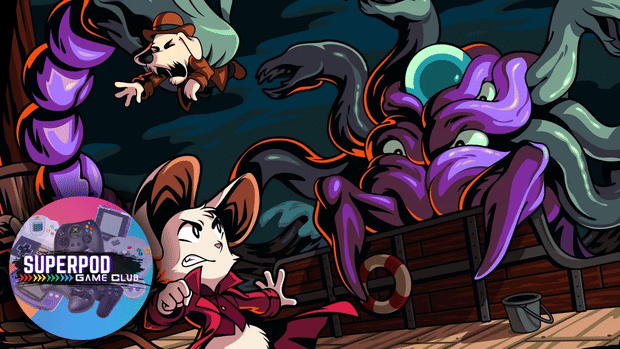
SuperPod Game Club dug deep into Mina the Hollower!

Jake and Cameron analyze the narrative, mechanics, gameplay loop and industry impact of Berserk Boy!
Sign up for the Digital Deluxe Edition of the podcast on Patreon!: https://www.patreon.com/preordercast?fan_landing=true
► Join our Discord Server! https://discord.gg/rgmEEUrB2m
► The Pre-Order Cast GG App https://ggapp.io/preordercast/lists/most-anticipated-games-of-2023-LWclmE0B
► Show Twitter https://twitter.com/preordercast
► Jake's Twitter https://twitter.com/jacob_chipdip18
► Cameron's Twitter https://twitter.com/masssgeneric
[00:00:00] Ladies and gentlemen, welcome back to another episode of the Pre-Order Bonus podcast. I'm one of your hosts, Cameron Warren, and I'm joined as ever by Jacob Price. It's me. Jake, it's, it's him. Uh, it's March 6th, 2020 floor video games. There's still a thing. Um, you
[00:00:32] would think that I need to clarify something that we talked about last time. We talked about, I think maybe like, you know, like the implosion of the games industry. I just want
[00:00:45] to like be clear on the late week. We're talking about in the context, like this is not a, the market is not crashing. Right. For games, like games are still up. I think it's three or
[00:00:58] four percent year over year. The problem is, is they're just not up enough. Right. Um, and this is evidenced by recently, we should just briefly mention this WB put out some statement. I think it might have been on a click, a quarterly earnings call, how they
[00:01:17] were like, yeah, we're pivoting completely away from AAA to live service mobile free to play. And that is after having the number one highest selling AAA game of last year Hogwarts legacy and with suicide squad completely falling flat on its face. They're
[00:01:39] still no not doing AAA. We want free to play live service. That's our whole strategy now from the outside looking in. There's, there's no logic here. Right. And, uh, in our discord camera and I were discussing this a little bit, just like how does this
[00:01:58] exactly happen? And folks, we're not trying to really generate like sympathy necessarily for these big wigs who are in charge of all this money. But it is interesting to sort of consider like, okay, how is it that a company from with these circumstances makes
[00:02:15] this type of decision? And what it comes down to is that for these people, despite Hogwarts legacy selling so much and making so much money, it is still considered a risk even though I feel like a Harry Potter game of that style was the safest hit
[00:02:37] possible. Right? Like, I feel like it was pretty dang safe. But that is the how volatile the games industry is where something as safe as Hogwarts legacy feels like a risk. Yeah, I mean, in fairness, and again, I, I like to play
[00:03:00] devil's advocate, but I do think this is dumb. Yeah, I think this is dumb. Like there's just, you know, we've talked about this before, but when it comes to creative businesses, I think businesses like just I think just creativity and
[00:03:17] art and business just a lot of times are just like oil and water. Because I just think it's such a hard business because businessmen and executives inherently, they want predictability more than anything. It's like they crave it. They
[00:03:35] just crave it. They can't and they make every decision within the lens of how can we get to a predictable riskless business model, which analytically that makes complete sense. Like you want a safe model that you can put into a
[00:03:56] spreadsheet that's going to make you the set amount of money with a set increase year over year and it just all runs like clockwork. I mean, that's what you might as well be selling like steel beams. Yeah. Right? This is
[00:04:07] what everybody, people who run gaming company, they could also be the CEO of a steel beam company because this is the way that every executive operates. But when it comes to creativity and like entertainment companies, there's this
[00:04:21] element of like creativity and art that you cannot put predictions around, that you cannot calculate risk for because so much of the success is put into the hands of creatives and you're saying to them like,
[00:04:38] hey, go execute on a vision. And when those decisions get made by committee, like we know that they end up performing poorly. Now, that being said, Suicide Squad is an interesting use case because it's pretty clear like
[00:04:53] reading the tea leaves and kind of reading some of the news is that the studio heads of Rocksteady, they wanted to make that game. So this wasn't necessarily WB forcing them to make a live service game. They wanted
[00:05:04] to give it a shot and it looks like they failed. Ouch. And so that one's on the creatives, whoever decided to like put that vision forward, that's on them that like they weren't able to fulfill that vision. But and that's
[00:05:17] the thing with like art and these crazy things called video games just sometimes does work. And that's that's where like your biggest most successful things are they're unpredictable. They're just inherently unpredictable because creativity is just inherently like an unpredictable, completely unpredictable endeavor. It just doesn't work like that.
[00:05:39] Anyway, yeah, it's sort of on that note. So my wife and I we recently watched this movie. Oh my gosh, I'm totally blinking on the name. But it's about the final years of Vincent van Gogh and it's Willem de
[00:05:51] Faux playing van Gogh. Oh, nice. Oh my gosh, it was great. It was a great movie, right? And it was interesting because, you know, famously van Gogh is one of these people who obviously produced Super Purlific created a ton of paintings and in his lifetime was
[00:06:08] impoverished, was being sustained by his brother, and was not considered to be great that great of an artist. People really didn't enjoy his style. And then after he passes, of course, interesting, I didn't know this, but it was through his
[00:06:23] sister a lot mostly. She did a whole lot of promotion of his art pieces and really turned the tide sort of how people viewed and perceived his artwork. And now, of course, you know, sunflowers, for example, is an incredibly famous piece of art. And that's
[00:06:39] that's sort of the fickle thing about just any sort of artistic enterprise, right? The try to try to really like you say, like, business fi, the production of art is extremely difficult, because art deals with human emotions. And it is the
[00:06:54] expression of humanity and how relatable that is, how your sort of expression lands within the historic and cultural circumstances from which artists produced, it's super hard to really pin down. And sometimes people will resonate with a particular piece
[00:07:13] of art years later, because for whatever reason, like, oh my gosh, when this person was expressing this, maybe it didn't resonate with their own time period, but it really resonates now, right? And you can and we can think about less famous
[00:07:24] examples about this as well. Like even just like, suddenly there's an older song that comes back in popularity, like, because it's it's used artistically what's that Kate Bush song that we use in Stranger Things 4? Crap, like running up the hill or something? I'm losing my
[00:07:40] I'm not sure. Anyway, I'm making all these references now. But the idea of being that like, suddenly it comes back and it becomes it comes in vogue and it resonates with people differently and in a different way and in a different
[00:07:53] historical context. And so trying to really create a video game, which is a project, you know, video games take years and years to develop. It's like the second you start creating a video game, you're already behind what's mainstream, like in terms of when it will release, because
[00:08:10] it's being planned out so far in advance, which isn't unique to video games. But I think that is a problem that is worse when it comes to video games as an art form. And on top of that, they're so crazy expensive to make, right? So
[00:08:26] trying to get that predictability is really just near impossible. I was going somewhere really profound with this, but I've kind of lost my No, I think I read. Okay, no, I think I read what you were saying. But yeah, I mean, a good example is just
[00:08:41] a throw out there is a dune when it came out in 2020 2021 during pandemic. So I went straight to HBO Max, was in theaters didn't make a lot of money. Oh, I didn't know that. It didn't make a lot of money. So people don't know this, but
[00:08:59] it was critically well enough received that like the sequel got greenlit. But in today's environment in 2024, dune one comes out, sequel's not getting greenlit. Like you're done. And now you have like it looks like dune two is going to make a jack
[00:09:18] ton of money. Yeah. And I mean, could be the like inception of sort of a new marquee sci fi for I mean, I saw last night and it's I mean, I'm not shy about saying like, I think it's incredible. Like it's really, really good. But those don't
[00:09:34] happen. You know, it's it's you can't you can't predict there's a good book called Last thing I'll say on this is a good book called alchemy from this guy named Rory Sutherland who's this behavioral economics dude. And he talks about this idea in
[00:09:50] business that if you try and think out you're actually like any person in a business is highly, highly, highly incentivized to never think outside the box. Because even if you come up with a really creative out of nowhere out of the blue out of
[00:10:10] the zone idea, and that idea becomes like super, super successful. The people above you will chalk that up to luck. And arch. And so you will not get the credit for it because they'll have nothing to point to you to say like, oh man,
[00:10:28] that was like such a good idea. They'll just say, ah, this is lightning in a bottle Hogwarts legacy, for example. A little different there because you have like a no one franchise. So on and so forth. Sure. However, if you do something if you go, hey,
[00:10:40] we're going to make Harry Potter fortnight, which is likely what their next big game is going to be. They're gonna they're gonna GTA online the crap out of that. Then if that fails, then they can just go Hey, like we did everything that this
[00:10:54] other game was doing that makes billions and it fail like we have no idea. And then everybody hire up you won't get fired because they'll go. Oh yeah, you're right. Like you did everything that the market said was the least risk possible and
[00:11:08] it still failed. Well, not your fault. It's fine. Right? We'll just we'll try again. Right. So that's that's what happens. Yeah. Yeah. That's so insane. That's so insane for me to think about but but it makes sense from such a risk adverse
[00:11:22] sort of mentality, right? It's where you you shift the blame away from yourself if you've checked everything off the list, right? And so you can go in there. You look at the big hits, you analyze them and you figure out what your checklist
[00:11:34] is. And then you reproduce something that's supposed to hit all those same checklist points. And then it's supposed to work right like getting back to this notion of predictability. And now I'm going to come back to the
[00:11:45] thought that I had before I lost it where when it comes when it comes to art and trying to track that checklist of what makes a work of art like good objectively, that is extremely difficult to do, right? And you have a lot
[00:12:00] of people in literary studies and art history, for example, who do produce that type of a list. They can produce it. Okay, objectively, you know, this art is considered a masterpiece or it's considered emblematic or it's considered to be top notch top top of its
[00:12:15] field because of these things that it's doing. And I would say the the real issue with art and how it doesn't sort of translate very well into that checklist idea is that when you are looking at sort of the objectively good qualities of art, they are so
[00:12:32] circumstantial to the art piece. And so something that I tell my students and I'll repeat now in this conversation is that if you want to objectively determine whether or not a piece of art is good or not, you must judge it by the standards that the
[00:12:46] art piece puts forward. So for example, if there's a poem and you understand that the poem was supposed to be, let's see, a poem that we went over recently was Rubén Darío. If you guys know your Nicaraguan famous poets. So he wrote two poems, one called
[00:13:02] Two Roosevelt and Another Ode to Walt Whitman. And the only way to really determine whether or not those poems are objectively good is to judge them by the standards that the poem itself puts forward, right? Not by looking at like, well,
[00:13:15] what is a poem supposed to be and what is that checklist, especially with something like poetry, which has such fluid form? It is really hard to nail down like a universal standard. And so let's apply this to video games, right? To
[00:13:30] determine like what a universal standard of what an objectively good video game is and one that will also sell incredibly well. Well, I don't know, you got Elden Ring and you get Vampire Survivors that both somehow, even though they're entirely like diametrically opposite
[00:13:47] games, they somehow both hit everything on this non-existent universal standard checklist of what makes an objectively good game and a game that will sell incredibly well. And so it's just impossible. There's no rubric. There's really no template. And I could see how that is
[00:14:05] incredibly frustrating for a lot of people who are trying to allocate funds to create a game that is going to, you know, increase your profits exponentially. It's just an impossible form. Yeah, it's a really a problem. I'll just I'll repeat what Sven, I still don't know how to
[00:14:21] say his last name, Sven Wink, Wink, Winka. We can take out their Swedish studio, right? We'll take a Swedish pronunciation class. Studio head CEO of Larry and who was like, Hey, 95% of games are going to be like, I can't remember the exact quote. I'm paraphrasing
[00:14:37] it going to be like live service or whatever. So if there's 5% left that are going to do these like independent double AAA games, that presents like a huge opportunity because if nobody else is doing that, then if you do do that and you make something that people
[00:14:56] react to, you know, emotionally, then you're going to have a massive hit on your hands, which, which is what happened with them. Obviously this is very nuanced, but anyways, yeah, it sucks. I wish these businesses would like to be honest. I don't think that they're thinking smartly
[00:15:16] that they're thinking rationally, but rationality and until and and savvy and smart thinking are not always the same. Right. And those get conflated to be like, oh, I'm thinking analytically, but in the case of like the type of business that you're in, you're actually not thinking analytically.
[00:15:35] You're you're thinking analytically in the wrong way. And so I think that's going to lead to poor decision making. Right. I mean, that's just like the difference between knowledge and wisdom. Right. You can gather knowledge and knowledge can you can you can reduce
[00:15:50] knowledge down to a trivia book and encyclopedia of just factoids, right, that that are present and you can draw upon but the application of that knowledge according to different circumstance with nuance with insight. That's wisdom. Right. Yeah. It sucks. It sucks out there, man,
[00:16:11] because WB's made some cool stuff before their studios excuse me, their studios have made some cool stuff before and I don't know. I mean, who knows? Maybe they say that now, but you know, once they have one of these that cost them like a billion dollars
[00:16:26] to develop and completely, which they already had one. So I don't Suicide Squad. Suicide Squad, I'm guessing, costs like 500 million plus dollars for how long it was in development. Yeah. And how expensive it looks. So, yeah, that already lost all its money.
[00:16:41] So like you're screwed on that for I don't know. It's seriously just super bizarre. Anyway, anyway, let's let's move on. I do want to kind of give us an interesting preface to the game that we are going to discuss because this conversation might seem a
[00:16:56] little farfetched, but kind of referring back to this 5% that you are paraphrasing, right? That, you know, indie games, you know, they they are impossible, I think to kill or to stomp out because of just how grassroots they can become. Like so many indie
[00:17:13] games can come from like grassroots or from individual, you know, monetization models to put it in fancy terminology, AKA concerned Apes girlfriend can work full time for five years while he makes Stardew Valley and then he can have a smash hit, right?
[00:17:29] And so we are going to be talking about a game that came out on March 6th. So incredibly recently, this game is called Berserk Boy. This was developed by Berserk Boy Games and we just want to give a special shout out and a big thank
[00:17:44] you to Lost and Colt, who is the team that kind of did PR for this. They reached out to us and they gave us keys for review. Cameron, you played this on Steam. I played this on Switch and this was this has publishing support from SMG
[00:18:00] Studio. So I want to make sure credits there where credits do. And Berserk Boy is really fascinating because it's sort of angled. Don't get me wrong, it's an incredibly original game, but it draws a lot from Mega Man and from Sonic and from some of these really older
[00:18:18] tried and true franchises and game design. And I think that is something special about this game that makes it successful, you know, in just last facts that I'll share. It launched with in 87 on Open Critic. I think that has ticked down a
[00:18:34] little bit in the past little while, but it's an overall really successful game and in part because of where it's coming from and how it balances business and artistic design. And I just feel like there's a bit more freedom in this type type of space.
[00:18:51] So we'll be talking about Berserk Boy today. Yep, let's dive in. We can talk about. We'll start off with narrative. Yeah, I think I know I flipped it. I flipped it. Cameron, I'm sorry. I totally miss what you're saying. I'm spacing out.
[00:19:06] No, no, no, you do the preface to the game and I usually do the categories. We've been doing this for years now. Yes, you did. Yes. So I took the reins and I flipped it. I'm sorry. Cameron, take it away. Man, you threw me off. I threw guys.
[00:19:19] I'm so sorry. It was where are we right now? Are we on a podcast? Our four categories for the pre-order bonus podcast. Number one, we talk about the narrative. We explore the story, the characters, the themes that the game is trying to communicate.
[00:19:39] Next up, we talk about mechanics. That is how does the game feel to actually play? What is what are the tactile things that you are doing in the game? How do they feel? Are they effective? Do they accomplish what the developers, the creators set them out to do?
[00:19:55] Then the gameplay loop, which is when you're in the game, like what what set of loops or activities do you do and in what order and then how are they organized to make the player feel some sort of progression or some sort of satisfaction?
[00:20:09] And does the game accomplish that? And finally, the impact on the industry every game when it comes out, there'll be something to say about it. Some more than others. And those games will have an impact on sort of the broader industry of video games
[00:20:27] and some games will have be amazingly influential and some games will not be. And we dive deep into that. Jake, let's start off talking about narrative. Cameron, I'm never going to do that again. It just felt weird. I'm so sorry. I mean, I messed it up, you
[00:20:42] know, I don't do it as good as you. Well, I messed it up because I guys were going to put this behind us and we're going to get into. I'm just sorry. It just it just felt weird. And I think it was my fault.
[00:20:53] But yeah, the narrative here I mean, it feels like it very much belongs in the 90s. And I mean this in a good way, right? It's it's super over top characters. You have Dr. Genos and his army of dark energy minions and they are trying to take
[00:21:12] over planet Earth and take over all the humans there. And that is bad and they're evil and we're going to bring them down. And so you play as Kai and you are part of like this sort of, I don't know if it's a resistance organization exactly, but
[00:21:29] basically the defense against the the army of darkness led by Dr. Genos and it's over the top. It feels cartoony and I think that's fine. I think it totally works for the type of game that it's going for. We don't not looking for depth here. So Berserk
[00:21:48] Boy narrative it's about a boy who goes Berser and that's pretty much. I mean true. That's a nutshell. No, I mean this is I kind of compare this to 90s Mega Man beat him up style like arcade game story where it's like the narrative is not, you know,
[00:22:13] there's there's nothing like deep to say or explore. I think I'm a narrative here, but sort of classic like boy gets superpowers and fights crime and saves the world and fights against bad guys. And that's that's kind of the basic and it doesn't need to
[00:22:29] be more than that. It's this game. This is a game really more about the mechanics of what it's doing and sort of the callbacks to like 90s era Mega Man style Sonic the Hedgehog style platformer. Yeah, I would say that last thing really about
[00:22:46] narrative that I have to say is that as you kind of expect each character has a lot of personality, I think this goes a long way. It kind of does at least the key that we play does sort of this interesting hybrid. There is voice acting, but
[00:23:02] they'll probably just say only a phrase of what the dialogue is, which I feel like is kind of common in this era of games and in this style of storytelling. I actually kind of liked that because I like it when games like this
[00:23:16] because I feel like it was more common than as well. When games give you enough for your imagination to springboard off somewhere else. And so I felt like that was very true of the characters here as well. But yeah, story. I mean, it's kind of what you
[00:23:32] would expect. And it all really just plays a part of giving you a reason why. As Berserk Boy, you get these new elemental powers and what it takes to sort of track those down. And so that's really how the game is set up. Here, I'll just read lastly
[00:23:50] just a little synopsis that they give us. This is in the distant future, a mad scientist and his army of darkness seek to enslave the people of Earth. Hope for all humanity rests with the resistance. But are they enough? Enter Kai, a rookie hero who
[00:24:02] is transformed by mysterious orb energy into Berserk Boy. And that's it. It's a Saturday morning cartoon. It's a lot of sugar and it's a lot of fun. It's like Cocoa Puffs, Cookie Crisp, Lucky Chomps all rolled in the wind. All grain cereals. Let's talk about the mechanics
[00:24:17] because this is where I think. So this is a game that for me. I think requires a huge amount of nostalgia to get the most enjoyment out of it. And I don't think that's a bad thing. That's not. I'm not like that's not a critique.
[00:24:33] But if you didn't grow up playing a lot of Mega Man or a lot, a lot of Sonic, if that wasn't like your prime gaming as a kid. It's probably not going to hit you. Maybe as much as it's just not going to hit that
[00:24:51] heart, in my opinion. I personally felt like I am a kid from the 90s and 64, like late 90s like in 64 era. Right. So I played, I dabbled a little bit in these types of games, like when I was a little kid, Mega Man and those types
[00:25:05] of things. Yeah. Fun. But yeah, I mean, so basically what you have here is you have the superpowers you start off with you know, essentially like a purple lightning, like dash power and then as you defeat different bosses, similar to Mega Man, like you get new
[00:25:24] powers as well. And then you're sort of running through a course and a stage completing objectives as you go and then at the end there's a boss and then you can get new elemental abilities, as Jake mentioned. I think in terms of like feel
[00:25:40] I thought it felt really good, snappy combat. You move. I like the fact that you move extremely quickly, like it does not feel slow at all. Platforming is like fun and snappy. The abilities were were fun and like maneuverability is really high, which it just that
[00:25:56] felt really good. But yeah, I just for me, for whatever reason, and I can't really even. Pinpoint exactly what it is, but there it seems like there's a amount of nostalgia here that I'm missing and I could. I don't know. That was just
[00:26:10] like for me personally. I didn't. It didn't like hit me. It didn't like maybe do for me. It didn't do much for me. And I felt like it was primarily driven by maybe you needed to have played these other games and like remember that
[00:26:24] feeling in order to get the full amount of satisfaction. I don't know. That was for me personally. That's kind of I felt about it. Yeah, I think that's true. I would say my experience is slightly different and I was still able to have it really click with me.
[00:26:38] And but just and just to repeat some of the same points that you said movement, mechanics all feels really great. You really can zip through these levels once you get a handle on the different like orb ability that you're using, right? So it is very much like Mega
[00:26:53] Man and that like you get an array of abilities and you kind of assign or equip one at any given time and they will impact how you do combat and how you traverse through these levels. And yeah, when you can get into
[00:27:04] that flow state of mind and you can really zip through things. Oh man, does it doesn't really click? I would say that yeah, but the thing is is that this game starts off pretty straightforward. The further you get into it, the more abilities that you get,
[00:27:22] the more I found myself switching like a lot between abilities because it was either required or thought one would work better in a specific scenario to get through different levels. And so that sort of flow state for me diminished a little bit as the mechanics started piling
[00:27:39] on and as the levels got a little more complicated and as I got further into the game. So I think if you are the type of player that just loves really good game progression, but you also like a lot of mechanics and you want to
[00:27:53] juggle, you really want to think about your toolkit, then this game Berserk Boyd's definitely going to hit that for me. I did start getting a little overwhelmed, but you know, occasionally be like, oh, but when you that's the thing I feel like with Berserk Boyd,
[00:28:07] when you're able to get all the mechanics to line up and when you see the level design and you're like, oh, if I do this one zip attack, like my dash here in this line of enemies, I'm just going to fly through this section. Right.
[00:28:19] And so much of this game, I feel like when you can get that to work, when those pieces was snapped into place, which were more rare for me as it went on, man, it just felt so, so good. And I was a big fan of
[00:28:31] of those moments and that happened. Yeah. So I'm kind of starting to talk in circles, but the last thing I want to get out here is that with the level design and the way that the way that the mechanics are created and given to you,
[00:28:44] you this is one of those games that it's like it's about the speed. It's not about taking out every enemy, even though there are rewards for that. It's about using your mechanics to really just zip through. That's where the fun really was for me. Yeah, I wanted something
[00:29:00] more from this. And I'm not sure exactly what it is. Maybe it was difficulty. Maybe it was challenged like in the platforming. I'm thinking of like comparable like a pizza tower or Celeste or and those aren't necessarily Mega Man likes. They're more pure.
[00:29:18] Well, I guess pizza tower is kind of its own thing. But they're more like pure platformer. So I wanted the sense of challenge and like satisfaction from like, hey, are you skilled enough to like complete X, Y, Z? Whereas this I just I didn't get that from it.
[00:29:34] And obviously I didn't get completely through. So there's probably things at the end. I definitely think it's the end I'm in. So take everything I'm saying with a grain of salt. But I kind of wanted that like from the beginning, right? Like kick it off.
[00:29:46] Give me that hook in sort of satisfying completion. This is kind of taking us into the gameplay loop. Give me that like hook in of like satisfying mechanic that I kind of have to improve out and get better at in order to master the level.
[00:30:04] I didn't get that right off the bat, even though everything felt really good. And like you mentioned, I like the speed especially was really good. And obviously there's evolutions as you get more abilities and things like that. But I think I just wanted a little
[00:30:16] bit more of that. And in terms of like the gameplay loop, I think it's it's very straightforward. It's pretty linear, just very classic, like finished the level and then you can go to the next level. You complete the stage and then you can kind of move forward.
[00:30:31] Yeah, I love the gameplay loop of this. And to be totally fair, I don't I haven't played very much Mega Man like very little. I played a lot more Sonic, but I loved the level design here where it is super open. So essentially you it's
[00:30:48] extremely linear game, right? Like you have to complete this level and then you get to the next level and then the next level is going to be a boss. And then when you defeat that boss, you get that corresponding ability. And then you move on to the next
[00:30:59] quote unquote world. But in each level, like each stage, there are four different like check points that function as teleporters to get you around the map. And it was not just OK, sprint to the right. But it was I thought a really clever like maze design.
[00:31:18] And you really need to explore and find each of the corners of the levels if you want to get everything that it has to offer. And this game is full of stuff to collect and you really can go hard on upgrading your suit,
[00:31:31] for example, there's a ton of health upgrades or like weapon upgrades, ability upgrades and you can find all the resistance members who are lost and scattered about the levels. And I was a huge fan of that because sometimes I would play a level and, you know,
[00:31:48] there's no arrow term. Tell me where to go. And I would just follow it through and maybe I hit all four check points naturally. And then I went to the mini boss and I defeated the level. And then there were other levels,
[00:31:58] for example, where the way that I did it, I just kind of went straight to the end. Like I was like, oh my gosh, this level is over. Like I managed to sort of go around. And so yes, the levels that have there is like a critical path.
[00:32:12] But I felt like there were short cuts that rewarded like better and more precise platforming. And those types of things made made it so much more fun for me to be one complete a level and then to move on to the next
[00:32:24] and be like, OK, what is this next level going to offer me? So the game pushes you forward quite nicely. I think it does a great balance of an overall linear structure, be all the levels. But when you're doing when you're inside a specific level,
[00:32:37] I felt like I was really in control of how I was progressing through it. Jake, any other thoughts on mechanics or gameplay loop? I think I've said what I wanted to say on those. We could talk about impact. I mean, they're really straightforward, which I think
[00:32:51] for most people is going to be a good thing. I do want to say that there are two modes that you can play this game on. You can play it on like classic retro mode or modern and retro mode is just a little more punishing if you
[00:33:04] die, for example, whereas the other mode isn't. And the other mode, I believe, has like many checkpoints as well. I played it on the other mode because I'm not extremely like well versed in this genre of game. And I was super grateful.
[00:33:20] And so I would just say that like, if you're like me, you've played a little bit of Mega Man. I've watched a lot of Mega Man speed runs. If you are like kind of on the periphery when it comes to Mega Man or Sonic fans,
[00:33:32] I feel like Berserk Boy in its two modes does create extremely welcoming and inviting mode to people who are new to this type of game. Let's talk about impact on the industry. This is a solo developer, right? I believe so. OK, it took five years. Yeah, I mean.
[00:33:56] So going five years to make. Yeah, I mean for a solo developer, that makes sense. This is going back to that conversation. I think that five percent, right? That five percent of the industry that's made up of like the opportunity with Triple A and every big studio pivoting
[00:34:19] and trying to figure out, OK, how are we going to make these businesses flush with cash? We're moving away from this traditional model that has worked, quote unquote, but not worked to the level of financial gain that we want because we're greedy. So that opens a door
[00:34:42] even more because we've seen obviously the indie market over the last decade has become really big and there's a ton of indie developers and there's a ton of noise. I think there's some crazy amount. There's like 20 plus thousand games released on Steam every year.
[00:34:58] And so it's it's definitely like very crowded, but I do think this opens up the opportunity even more for games like this, for games like Berserk Boy to find space and like find a place in the market. And as like tools get easier to use
[00:35:18] and as tools get more accessible and this is where this weird dichotomy comes in because as games get more expensive and like harder to make because of the demand for like high fidelity experiences, if you are indie, I do think like the word at least
[00:35:36] maybe I'm wrong about this, but the vibe that I'm hearing is like it is actually getting more accessible. It's getting like easier is getting more accessible to actually make games and be able to fulfill like your creative vision a little bit easier than it used to be, right?
[00:35:51] Especially for like the sole developer or the smaller developer. I would say yes and no. I would say yes, because there's a lot more tools available that are cheaper. But if you are looking for any type of funding within the games industry, those pools are drying up along
[00:36:09] with this really, you know, risk adverse mentality in AAA. So it's a two edge sword, right? If you're if you're going into India and you're going to do something like Berserk Boy Games, you're going to do something like Concerned Ape, you're going to do something that
[00:36:24] you are not necessarily. I mean, Berserk Boy, right? They had some publishing help from SMG Studio. But the point I'm getting at is like if you want to be the solo dev and you're getting your funding from outside the games industry, AKA like you were working a full
[00:36:39] time job and then you're working part time on your game, like the tools and space and platforms for that to happen are are greater and more available than ever. But the second you're trying to get some publisher funding, it's becoming a lot more competitive and over less dollars.
[00:36:55] Yeah, I mean, so a little bit is a nuanced situation. That being said, regardless of maybe the challenge of making games, which obviously that is a hurdle and there's money and there's less funding and there's like all those sorts of challenges to overcome.
[00:37:14] As the market turns away from the types of traditional experiences that gamers like, there's more opportunity. There's more space in the market for more of those types of games like come in. So games like this, like Berserk Boy, I just think yeah, at the end of the day,
[00:37:29] games are incredibly hard to make and they take a long time. Yeah. But if if big developers are going to stop making the types of experiences that gamers have really enjoyed, maybe they haven't been the types of experiences that are making the most cash bucks,
[00:37:45] IE Fortnite, IE Roblox, IE GTA online. But the problem with those is that they own the market and to penetrate that market is incredibly difficult, IE probably impossible. So while they're figuring that out for the next five or six years, this is probably like the golden
[00:38:03] time to like try and get in there and and get something out into the market that's going to make an impact. And I'm not necessarily saying that like Berserk Boy is going is like the game to do that. But games like this, I think as more mainstream,
[00:38:23] like broader sort of audiences that are into games realize that, hey, the whole market has pivoted towards this type of experience that I don't really enjoy. They're going to go looking around for something to buy. And if your game is there to like fulfill the type of
[00:38:40] experience that these big studios aren't making anymore anymore, then that's a prime opportunity for you. Yeah, I would agree. I think that like creatively the space absolutely is opening up. And despite, you know, I feel like the last 10 years ever since this sort of infamous
[00:39:00] EA quote about single player games being dead, right? There has been some new iteration of that philosophy where single player games just aren't cutting it. And this is coming from Triple A. This is coming from the the well funded and the wealthier aspects of publishing aspects,
[00:39:17] especially right of of the video game industry. And time and time again, we just see that that simply isn't the case, right? And there is even a case for like couch co-op, something that is less and less common. And I think vampire survivors is another wonderful example
[00:39:31] of fantastic couch co-op, right? And people really enjoying that part of it. So I do think that like something like Berserk Boy will always find its audience. The trouble now, and this isn't necessarily new with how the video game landscape is changing right now.
[00:39:51] The problem that Indies will always face is, OK, you have a game that has a niche audience. How do you get the eyeballs looking at your game? And in a you know, Steam is incredibly saturated. All these markets are super saturated with with smaller indie
[00:40:07] games. How do you get your title that is a good game out to that many people? And so what I think is interesting and we'll kind of wrap this up. Going back to to how we started is looking at these really like like companies like Lost
[00:40:25] and Coal. And I do admire their team. I follow quite a lot of their team on on social media where they are trying to bridge that gap between games that are solid, games that have a place to be in games that have their demographic
[00:40:40] and can be not only artistically but financially successful and just taking the game and putting it in the hands of the players. Right. And so I do think that even though all the cracks and all the ruptures are sort of bursting right now
[00:40:56] when it comes to video game industry as a whole, that you're going to see a whole lot of creativity fill in those gaps and create new avenues and new connections in new ways to market new ways to create and just new ways to do the video game industry.
[00:41:11] So the Zerk Boy I think is an example. I mean, this is where I think what Cameron is saying as well, too, there is reason to be hopeful for smaller scale games while the video game industry is kind of restructuring and figuring
[00:41:24] out how it's going to go into the future. And maybe maybe for some of those indie games, it's just a little more hopeful. And that's a good thing. Well, Jake, this has been another episode of the period of us podcast talking Berserk Boy,
[00:41:37] which is out now switch steam other platforms. Jake. Switch steam. That's it. It's on switches steam currently. It might make its way to other platforms. I think we'll wait and see on that. But for now you can play it there. Go check this one out, especially if
[00:41:53] you are a 90s platformer Sonic the Hedgehog Mega Man fan. I think this will be right up your alley. So go check this one out. And thanks again to the publisher there. What was the name of that, Jake? Again, the PR company
[00:42:08] Lost in Colt for giving us those keys so we could give our breakdown of Berserk Boy. If you like the show, please leave us a review on your podcast platform of choice that helps people find the show. You can follow us on Twitter at
[00:42:20] period of cast. You can join us in our discord channel if you want to keep the conversation going. As we mentioned in the beginning of this episode, we're having lots of convos conversations, posting links on that discord, having debates, talking about the state of the industry.
[00:42:35] Like if you'd like that kind of stuff, our discord is the place to go. So come join in and don't be afraid of jumping into the conversation. Love having people in there. You can also support us on pager.com slash period of cast.
[00:42:47] You can sign up at the digital Alexa edition five bucks a month that gets you access to early gets you get your early access to our regular episodes. It gets you Jake's indie impressions and then any other specialty goodies, interviews, other things that we do, you'll
[00:43:02] get all access to that as well. Thank you so much for listening and have a great night.
Help us keep the site AD-FREE by donating as little as $1💸

This time I am joined by Youtuber Shnickerman to discuss Sledgehammer's return to the beginning of the series with Call of Duty: WWII. Follow me on Social Media! https://bsky.app/profile/thrak.bsky.so...
Top-down racers aren't a common sight on Neo Geo, so how does Thrash Rally fare? The guys dare to find out. Catch us online at https://neogeogo.show ★ Buy Us a Coffee ★ Follow us on Bluesky! Podcast:...
On this episode of the Gaming And Collecting Podcast Bill and Alex return to talk about the Super Mario Galaxy Movie, giving there thoughts on it. Follow the Gaming And Collecting Podcast on all of ou...
Andre and Steve are back at the Summer RPG Anime Festival with Princess Minerva, the aggressively horny OAV prequel to the aggressively horny RPG on PC-98, PC Engine CD, and Super Famicom. We didn't g...
Life has been punching us in the face and too much news happened so here's an episode catching up on all the crazy summer 2026 gaming news. Watch Jake stream on Twitch! https://www.twitch.tv/chipdip18...
On this episode of The 3DO Experience we return to another post 3DO console game with Warriors of Might and Magic, 3DO's second attempt at the series! Check Out Call of Duty: Thrak Ops: https://su...
On this episode of Geek Addicts Bill and Matt take some time to share there respective top 10 comic book film lists! Follow all things G&C Podcast Network here: https://linktr.ee/Thebarberwhogames Int...
Grant swings by to give everyone an update on why there has not been an podcast episode in a while. Superpod Network: superpodnetwork.com/podcast/tommy-and-grant-go-podcasting Blue Sky : tommyandgrant...
Video game expert Tommy is joined by esteemed colleague and guest Aaron to analyze Elden Ring. Creators & Guests Tommy Reinking - Host Aaron Klaassen - Guest Website: https://videogamesanalyzed.tr...
SuperPod Game Club dug deep into Mina the Hollower!
SuperPod Game Club tried Earthworm Jim 3D
Bill is a huge fan of The Sims on GBA. Read and see why!