



Mina the Hollower | SuperPod Game Club
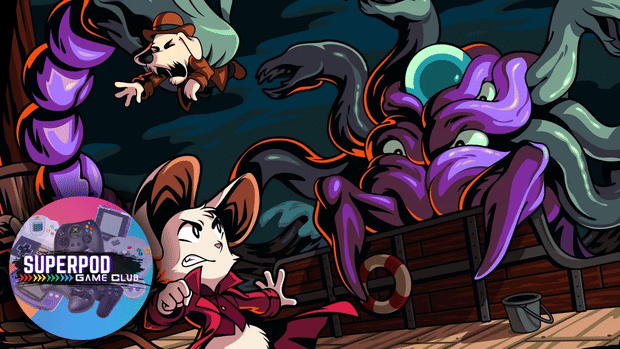
SuperPod Game Club dug deep into Mina the Hollower!

In the second leg of their BioShock journey, Andre and Thrak are confronted with a familiar yet interesting sequel. Does BioShock 2 differentiate itself enough from the shadow of the original to carve its own path, or is it damned by its previous success?
If you haven't heard part one of this sereis where we discussed BioShock, you can hear that right here.
Hear Thrak on The 3DO Experience right here
Fine Time on Bluesky: @fineti.me
Andre on Bluesky: @pizzadinosaur.fineti.me
[00:00] Intro and Production History
[05:55] Why Don't We Do Asset Reuse Like We Used To?
[12:06] Premise and Story
[18:02] Characters
[24:15] Gameplay Refinements and Backsteps
[31:05] Effects of Game Length
[35:54] Truncated Gameplay Aspects
[40:27] Minerva's Den DLC
[47:50] Tidbits and Ending(s)
[50:23] See Ya Next Time!
[00:00:00] Hey guys, it's your boy Dre here off the top with a couple things before we get started. First of all, this episode is part two of a three-part series on the Bioshock trilogy, meaning that we already did talk about the original Bioshock a couple of weeks ago. So if you want to hear that, we recommend you do. Check the description of this podcast to find a link to that episode. Secondly, this episode will contain full spoilers for Bioshock 2, up to and including story beats, character fates, endings, everything.
[00:00:30] We also may or may not refer back to things from the first Bioshock, and that would also be considered spoilers. So if you don't want these ancient games to be spoiled for you, we understand, and we recommend you tune out now. But if you're going to stick with us, we thank you, and we will get started right now.
[00:01:04] Hello, party people. It's your boy Dre. We're back. We're the Big Daddies, right? Not the Bioshockers? Yeah, the Big Daddies. I am back with Thrak. Hello, Thrak. The Cherry Poppin' Big Daddies. Cherry Poppin' Big Daddies, Thrakie. That was a terrible band. I thought they were all right. They're all right. The name is already like, ugh. It's a terrible name. It's not the worst name I've ever heard for a band, but you know.
[00:01:32] The worst name is still one of the most obvious ones, and it's Hootie and the Blowfish. It's one of the worst names of all time. It didn't stop them from going Diamond, but like, you know. Eh, I don't hate it. I don't like it at all. It's cute. It's cute. It is cute. If you're going to be an REM ripoff, you might as well name yourself Hootie and the Blowfish, I guess, huh? Hey, hey, now. Hey, now. Don't. No, no, no, no, no, no. Hey, hey. They are. They are. No, no, no, because REM are a lot more fucking interesting than they are.
[00:02:02] They're better songwriters. They're better singers. That's what I meant. That's what I meant. Hootie is an REM ripoff. Shit. Eh, I don't know about that. Oh, please. How dare you? No, REM is the better band is what I'm saying. Like, Hootie. That's what I'm. They're no REM. REM. A ripoff. Cheap version. Dollar store REM. I feel like even then you're pushing it. Oh, boy. All right.
[00:02:30] We're here to talk about Bioshock. Duh. I'm surprised. I'm surprised Ken Levine didn't give it like, you know, you know, like the duh or like some sort of what is that Joker movie called? Fully something. Everyone just calls it Joker 2. Part flop. Part flop. Joker part flop. Yeah. Well, it's funny you mentioned that because Kevin Levine was not a part of this game's development. Oh, really? So, okay. Yeah. Tell me about any production notes that you can that you dredged up because.
[00:03:00] Well, well, originally Ken, Ken Levine did not want to do a sequel to Bioshock. Okay. As we had said before, the ending of the first game, it's a pretty like definitive ending, you know, like it kind of ends neatly. And Levine was like, yeah, I didn't really want to do an ending. But because the game sold so well and was acclaimed so much that 2K essentially made a new studio
[00:03:25] called 2K Marin to develop a Bioshock 2 because eventually Levine kind of warmed up to the idea of doing a sequel. But his idea for a sequel to Bioshock would come in part three. So Bioshock 2 was handled by like some people who worked on the first game to just kind of come in and be like, hey, let's do something to, you know, kind of give people more of the first game, basically. Exactly. That's exactly what it is. And that's what I want to say about it.
[00:03:55] Bioshock 2 was released on February 9th, 2010, by the way, which I didn't remember it coming. I thought it was like 11 for some reason. I don't know why. But that was my expectation of Bioshock 2. And that is exactly what I got. Because when Bioshock 2 came out, it always seemed like the kind of thing where people were like, yeah, it's more Bioshock, I guess. Yes. And it is exactly that. And personally, that's fine.
[00:04:20] But that also means Bioshock 2 is a lot less fresh and exciting than the first for other reasons besides that. But I think that's OK, because you can only have the experience of the first game once. You know what I mean? You can't like really replicate that. And Bioshock 2 doesn't really try to. But that's both like good and bad, which we'll get into. But yeah, what were your expectations? You played the first one. Were you just expecting the same more Bioshock? Yeah, because that's what everyone had said about it.
[00:04:47] But this game, it's interesting that like it's a little divisive because there are some people I know who love this one the most. Like this is their favorite of the Bioshock trilogy entirely. Really? Which I find to be an interesting take. And but like the general consensus was people being like, yeah, it's good, but it's not as good as one or three, you know, because those are, you know, their own kind of beasts. And two, just kind of represents more of like a black sheep for the franchise. There are things about it I do like.
[00:05:15] I was excited for the idea of playing as a big daddy the whole time. Like that was really cool. OK. But beyond that, it was more just like, oh, it'll probably just be that, but it'll be Rapture again. It'll probably be the same game again, but like slightly different. And that's kind of what it is. There are things about it I like more than the first game. But I think overall, the first game is superior to it as like a complete package. Absolutely.
[00:05:39] But two has some really nice quality of life fixes on the gameplay and and and tries to tell an interesting story. But I think it kind of fails. Yeah, I think the story isn't nearly as interesting. OK, yeah, I think we're pretty much in agreement on that. But I want to before we get too deep into the game, we're recording this in November, almost November 2024. Over the last like year and a half, so many studios have closed.
[00:06:08] The industry is going through this crazy upheaval, so many layoffs and everything. And it's all because or mostly because I should say the AAA gaming space. We're taking five, six, seven years to make games. No one cares about that thing anymore by the time it comes out. And it's like an entire mess. It doesn't sell or it doesn't come out good or whatever the case may be. What happened to the asset reuse sequel like Bioshock 2? I feel like we don't do that anymore. What happened to the Fallout New Vegas?
[00:06:36] Like, I hate that we got away from that in this modern day, because I feel like if people just looked at something like, I don't know, Star Wars Outlaws and been like, oh, you know what? We could probably make a great sequel out of this by just doing the same goddamn thing. I feel like people wouldn't mind that. But we don't do that anymore. I think it comes down to the fact that people tend to have like higher expectations for these AAA games because they're making so much money.
[00:07:03] And I think people want more, but like they don't really understand game development. Like, like people complain about asset flipping these days, but like I've played so many games that like it's obvious they're using the same whatever. But it's like it's not that big of a deal. Like, I mean, a modern day comparison, Spider-Man, the Spider-Man 2. Like there's probably a lot of asset flipping in that game as in those games as well.
[00:07:29] I mean, those games did cost a lot of money to make, but it's like it's not that big a deal. And the AAA industry, it seems to be struggling from like they're spending so much money on these games because they want them to look like pretty and nice and shiny every time. But then people like will see read reviews or watch YouTube videos and people will be like, yeah, it looks nice. But the gameplay is just kind of whatever. And then people just like they don't want to play it because they're not really that interested in it.
[00:07:55] And if the moment it doesn't make any money, it just like completely disappears. Or like, you know, games, they're not selling well enough because I think expectations are too high, especially in this like post pandemic world. Because I think the pandemic kind of caused the sales of games to go up like crazy. And it feels like now it's starting to come back down to like kind of like normal levels. But the I guess these people weren't preparing for that. I don't know. The whole thing is stupid.
[00:08:21] Like we're coming off of like I think it was yesterday from the day we're recording this that a firewalk has been closed. Yes. Like they officially shut it down. It's dead. Concord is not coming back. I called it. You did. It's a shame that they just went ahead and closed the studio. I mean, it was such a disaster. But it's like at least let them try another game. You know, maybe be like, hey, instead of doing this, maybe like something else, you know, like give them a chance, you know.
[00:08:49] But again, it's we're in a point now where like no studio really wants to take that kind of a chance unless you're like I mean, like Nintendo's got it down to a science. But like with Sony, I feel like Sony does not really know what to do. Like Astro Bot is kind of a sign of what they should do. But I'm worried they're going to not take the correct lessons from the success of Astro Bot. No. So it's one of those we'll see.
[00:09:15] I'm afraid of like, you know, I think about that in the movie space, too, because Barbie was such a smash hit. I'm like, they're going to take the wrong lessons from Barbie. They're going to try to make a Mattel cinematic universe or some shit or they're going to try to like. Well, they haven't announced anything like that because the movie industry is not as secretive about what it's doing as the gaming industry. Of course. And I feel like if they were going to do some like board game based on Hungry Hungry Hippos, some fucking movie on that shit, we would know. Right.
[00:09:41] They'd probably be like, oh, we have the plan, you know, because the movie industry is a lot different than the gaming industry. Of course. But it's just like I feel like these companies do that. But like, yeah, I wish I feel like we could go back to that. You said Spider-Man, too. I don't even think you have to look that far. Far. Miles Morales was basically just a quickie sequel to that. And everyone fucking loved it. I think it's better than Spider-Man. So, like, I don't know, man. Like, I feel like we can still do that. It's just people being like selective, like selective criticism.
[00:10:10] You know, it's like certain games, they'll get pissy on the asset swapping. But then other games, they won't care at all. Like, it's just people are just there. Humans are consistently inconsistent. We sure are. Like, I learned that I read that quote in a psychology class. I forget who actually said it. But it was a great quote that has stuck with me ever since because goddamn, is it true? We are. We absolutely are. I just wish we'd lived in a world where a thing like Bioshock 2 could exist.
[00:10:38] And I feel like we just don't have that anymore. And that kind of sucks. But, you know, whatever. Well, what's interesting is that, like, yeah, you said AAAs, right? But if anything, this game to me feels like a AA game. Yeah. And if you want to talk about an issue in the gaming space, it feels like you have your indies and then you have your AAAs. And it feels like there's a bit of void there, like between them.
[00:11:05] And it feels like it's being filled with, like, remasters and remakes and that kind of stuff is what's filling it. But there's just not enough, like, AA games. You know what I mean? Like a, like, I don't know, like a Biomutant. You know? Robocop. Yeah. Robocop. Yeah. Like these games, it feels like they're trying to make more AA stuff. But it's been like a gaping hole for quite a while now. But hopefully that'll change. But yeah, but Bioshock feels like a AA game.
[00:11:31] Maybe it's just because it like it is a direct sequel, but you can tell it doesn't have the same sort of like, I don't know, backing to it that like one and infinite have. Because those are like the two titans of the series. Right. And to just kind of, you know, it's like it's like you have like your two towers here. Whoops. And then like right in the middle, like like the parking garage in the middle is Bioshock 2. You know what I mean?
[00:12:06] Okay. Let's set the stage for Bioshock 2. Why don't you read the premise synopsis, if you will, of the game? All right. So this is this game is set eight years after the first game. And we follow a character named Subject Delta, who is a prototype big daddy. He is sent on a quest to reunite with his little sister that he was previously bonded to, Eleanor, across a changed and even more dangerous Rapture. The game explores more brutal gameplay than its predecessor with new enemies, weapons, plasmids and gene tonics.
[00:12:35] And it's a different version of Rapture. So this is, you know, after the first game, after everything has happened and you as Subject Delta are now sort of released into Rapture and have to find your little sister that you've bonded with. And over and over the course of the game, you meet new characters, familiar characters and just sort of explore Rapture in a similar way to the first game. But not as similar because now you are a big daddy. So you get to drill, go brew into splicers. Yeah.
[00:13:04] You know, let me start there, because when I saw because I didn't know this beforehand, I didn't know that Bioshock 2, you played as a big daddy. So when I saw that that was the case, a part of me was kind of like, really? OK, we're just going to, like, take the thing everyone knows from the first game and, like, make that the thing now. Fine, whatever. So, like, I was a bit cynical at first, but I quickly realized this was necessary for making this game feel not exactly like the first game, because that's the thing.
[00:13:34] You're not just a person. You're the thing. Like you said, you have to drill. You have, like, a rivet gun, like your Torbjorn or some shit. And you're just like, yeah, it feels different from the outset. And I think that's very, very important. Like we said, this is a very samey sequel to the first one. And, yeah, so at first I was cynical about the big daddy thing, but then I realized, no, that is cool. Like it feels fan service-y a little bit to where it's like in the first game, you're like, oh, those big daddies are super cool. And I imagine people are like, that'd be cool if I could play as one.
[00:14:04] And then I imagine the people who made this game took that idea and they're like, yeah, we'll just make a game where he plays a big daddy. Like it's the easiest thing to make it separate from the other game, but make it intriguing. Because, you know, everyone who plays the big, you know, played against the big daddies, it's like, oh, that'd be an interesting like gameplay idea to play as them. And dealing with like, you know, bonding with the little sister and all that kind of stuff, which is a core part of the gameplay.
[00:14:30] Every decision you make essentially affects whatever ending you might get or how she's going to essentially turn out. Exactly. Yeah. And then as like the story progresses, you learn more about why you're bonded to this specific little sister and all of that stuff. So like, it makes sense that they set it up like that. And I think it makes the game different enough to be kind of its own beast. Because if it wasn't that, it would feel like glorified DLC. Yeah, it would.
[00:14:58] And I think that that's what really makes it feel different. Overall, though, about the story, I really appreciate or just the narrative in general. I really appreciate that Bioshock 2 very heavily assumes you played the first game. Yes. So they don't really do a whole lot of like over explaining a stuff or the situation at hand or anything. You're just kind of like there. And even if you haven't played the first game and you started with two, the game is so great about context clues and showing you the world instead of telling you about it.
[00:15:27] I think anyone could get up to speed pretty quickly and get into it, in my opinion. I would find it weird if somebody decided to play this game first before Bioshock 1, especially when people know how closely like this is such a direct sequel. It's like starting with it's like it's like playing Final Fantasy 10 2 before 10. It's like, why would you do that? Like, just play it. Play that one. Play the first one first. Like, it's perfectly fine. It's like starting with John Wick 3 or something. It's like, what the hell is happening? Yeah.
[00:15:56] But I think even then, I feel like if you just watch John Wick 3, I feel like you'd be like, you know what? That was a cool action flick. I don't think I understood the whole back. But it's like, yeah, I think you could get a lot out of it. Bioshock 2, I think, is the same. Like, I think you'd probably be able to appreciate some things about this game more playing it by itself before one because it does a lot of things that one does. But I have a feeling if you played two, you'd probably be like, oh, that was really cool. Let me go back and play one. And then you'd play one and be like, well, this is just a much better version of two.
[00:16:26] You know, because I think overall it is. I think so. One of the things I kind of criticized about the original Bioshock in our previous episode is that I felt like the Andrew Ryan shtick got a little old by the end. These parasites don't understand, blah, blah, blah. It's like, OK, dude, I get it. Right. And a fair amount of that stuff is in Bioshock 2 still. And it's very much the same kind of thing from that we heard in the first games. And that newness has really kind of worn off for me.
[00:16:55] However, there was a couple of clever things. Like I like that museum part early on where you kind of click on the exhibits and they they tell you always like Andrew Ryan superhero propaganda, you know, like that. That's that's kind of funny. Right. Like I like that stuff. Yeah, it does keep the like the lore and the world building that Bioshock 1 did so well, but it definitely comes off as like a sequel where it's like further developing that stuff.
[00:17:18] And yeah, giving little hints to people who say maybe they need a refresher after a couple of years or, you know, it could be people jumping into this one for the first time for whatever reason. So it does that thing. I think a lot of good sequels do. And that's it helps catch you up if like, say, you're behind or you forgot or whatever. But if you're if you're coming in and you know it pretty well, there's enough meat there for you to like really kind of sink in and enjoy it in that regard as well. I absolutely think so. Yeah.
[00:17:48] So maybe maybe just because I probably maybe would have not felt that way if I played him back to back. Maybe if there was that three year gap, I might be like, OK, or maybe two and a half years, I guess it is there. It's like, OK, I'm getting I'm refreshing here. Let's talk about the villain, Sophia Lamb. Right. Thank you. I did not understand the boring. She's a fucking bore. Who gives a shit?
[00:18:16] She's just a crappier Andrew Ryan and she's not nearly as interesting. She has no real ambition other than like, I'm evil. That's basically her. She she's essentially like a lazy combination of Andrew Ryan and Fontaine where it's like that. It's like she just wants to take over Rapture. That's all she wants to do. And it's just like, oh, so like because the plot feels in a lot of ways like a retread, like, oh, you've got to stop the villain from taking over Rapture, blah, blah, blah, blah.
[00:18:43] You know, but it's just like it just feels like just more incidental because like Bioshock one comes off as incidental. But then when you find out it's all preplanned and everything is kind of awesome. But here it never has that moment, you know, like she sucks. It tries a little bit to be it tries a little bit to have kind of a twist with like the little sister stuff. But it's it's not handled nearly as well. And you can kind of see the twist coming from like a fucking mile away. So it just it doesn't hit the same way.
[00:19:13] And yeah, she's just like, I'm evil because being evil makes me horny or something. I don't know what her deal is. Yeah, I would have understood that more. She gets off on it. I mean, that's like every Mad Max villain, right? Yeah, but it's like it's like Andrew Ryan was like a well-defined character and it was explained why he was doing what he was doing. And then like Fontaine and Atlas, like they're all like as well-defined characters that have their own sort of motivations.
[00:19:38] And you can sort of see those sort of like warring motivations between them, which is what makes them interesting. But Sophia doesn't have anybody to play off of. Maybe Tenenbaum, but like Tenenbaum doesn't really show up until like the very end of the game. Yeah. You know, and she just kind of does the same shit she always did, which is, you know, like be nice to the little sisters. Be nice to them. I was not nice to the little sisters in this game. Because like because I like Tenenbaum quite a bit, but I like her more in one because she feels more integral to the plot.
[00:20:07] Whereas here it almost feels like they're like, oh, we need to throw somebody in for last game. Let's get Tenenbaum. Let's throw her in there because it makes sense. You know, it feels a little slapdash. Yeah, I think I think that's what. Okay. Hey, the first game had this to a degree like where you just kind of go through sections where it's about a character almost. Right. Where it's like, okay, here is the what's that guy we like so much? I forgot his fucking name from the first one. Sander Cohen. Thank you.
[00:20:37] The Sander Cohen part or like whatever. Like you have these characters where it's like, okay, then you have like a section kind of kind of about Tenenbaum. Right. Bioshock 2 really has that. You have like the Gil Alexander part. You have the Grace Holloway part. You have the you know what? It feels like very segmented. I don't even know if that's a criticism so much. It's just like I don't know. I guess it makes the game feel a lot less exploring, a bit more linear, which again is not a bad thing.
[00:21:05] But it was weird to play a game so similar to the first, but also just kind of like tunnel vision. Like, okay, now you are doing this. Yeah, it is more linear and it feels like the story is a lot like similar, though. I think the linearness of it is like a good thing because Bioshock 1, I think, had a little bit too much backtracking for my taste. Okay. But Bioshock 2, it like it's basically I wouldn't say it's a straight line, but like it's much closer to that.
[00:21:32] And I think it's better because it allows the game to have just a more solid pace, especially when the story in the world building isn't as good as the first time. So like it doesn't need to be like a big expansive world to have all of that stuff there. You know what I mean? Yeah, I agree with that. Yeah, I was kind of in like I saw the pros and cons of it, you know? Yeah, because I think where this game shines is in the gameplay. Yeah, I mean, for sure. We will get to that in a sec.
[00:22:01] I do want to talk about Grace Holloway for a second, though, because you were going through this apartment building and you were finding the notes of this of this black lady, Grace Holloway. And you find a note where she's like, Rapture was good at first, but as soon as things went bad, all those old prejudices came back to the surface or something like that. You remember that? And I'm like, OK, well, how about you tell me about that?
[00:22:30] Like, not that it would surprise me to find out like Andrew Ryan was some horrendous racist or with all that parasite talk or whatever. But yeah, you know, like it is implied in Bioshock one. It is implied. It's heavily implied. Yeah, we we said as much. But like, OK, so I chose to kill Grace Holloway because I wanted to see the bad ending. I was doing everything bad. I was killing everybody. I saved her because I always want the good ending. OK, yeah. So I wanted to see the bad on purpose. So I was harvesting all little sisters. So I killed her.
[00:22:57] And then so you didn't hear this because you didn't kill her. After I did that, Sophia Lamb comes on the radio. She's like, you murdered Grace Holloway, ratifying her bigotry. Lady, what? What does that mean? What the fuck are you talking about? Ratifying her bigot. What does that fucking mean? I think are they trying to imply that she's like a bigot? Yeah, I don't know. And I hate that the game is so vague with that kind of stuff.
[00:23:26] It just feels thrown out there with a lot with not a whole lot of attachment. And I think the story could have been more interesting if they dug into that stuff. Yeah, because there definitely are like some interesting characters, like say, like Grace Holloway, you know, like there there's definitely. There's definitely something there, but it just doesn't do enough with it. You know what I mean? Especially with some.
[00:23:49] Well, I will say like Minerva's Den, which we'll get into a little bit more in detail later, I think does a better job with what it's doing, but it doesn't work with a lot.
[00:24:15] Let's talk about some of those improvements to gameplay or combat in general or whatever, because we talked about how it is a little bit more refined than the first game. In some ways, a lot more refined, but I don't think all those things totally work all the time. I think they mostly do, though. Like for for one, I'll just start here. I love that damage is higher across the board. I thought like stuff in the first game probably took a little too many shots to kill, especially big daddies.
[00:24:44] As we talked about, it was just a little too much. This is easier as a result, and I don't think that's a bad thing. I think this game I think the first game was a little too rough around the edges with that. I do think it could have just been a skill issue, but I think there's a bit of a difficulty spike near the end of the game that kind of like pissed me off because there were the end of the game where I'm like these spices are hitting way harder than I remember them doing. But it's not till like when you're at the end. So, yeah.
[00:25:12] But yeah, like I enjoy that there's not as many weapons and not as many ammo types because it's like you didn't need all that shit. It trims it down to just more like what you would expect a big daddy to carry. And that stuff is great. Like the drill is super fun to use. The rivet gun is very stable. And then the other weapons they give you later on are also very good. Like every weapon in this game, it feels like they all have more of a purpose and they're all much more usable in the various situations that the game gives you.
[00:25:40] And you get them a lot quicker, too, because it's a shorter game than the first one. You gather up all those weapons fairly quickly. Absolutely. Absolutely. It definitely it helps that this game is like at least like an hour or two shorter than the original. I would probably say more. Yeah, probably more. And that's the thing you can tell when you're playing the game and like the combat sections, I think, are much like shorter and much more action packed as well. So you kind of get to like, you know, enjoy them a little bit more. The hacking minigame is gone.
[00:26:11] Sucks. No more pipe dream. Well, it was something people did not like in the original Bioshock. A lot of people were not fan of the pipe dream. That's in some ways I can understand it. But in other ways, it's neat. But this game replaces it with something that I get what they're trying to do with it, but I don't like it nearly as much now where it's you just like shoot a hacking dart at things.
[00:26:35] And then you get the the little bar and it's like you have to hit it green a couple times or whatever or not hit the red to hack it properly. And it's OK. It feels like like a micro game kind of thing. It's like it reminds me of like the Gears of War active reload. But it's not as but it's not as good as that. Like I would use the auto hack darts like all the time. So I'm just like, fuck this. You know, if I could just, you know, go past it. Like it's OK that it's there.
[00:27:02] But I kind of wish there were, say, certain say, like if you go to like a safe or something that was more kind of stationary and you had to hack it, you could do the pipe stuff. But if, say, it was like a security camera and you shot the dart at it, then you would have to do that kind of thing, which like makes sense in the context of how you're hacking things. But it's not nearly as interesting, not nearly as interesting that that really I'm not saying I expected it to come back exactly.
[00:27:29] But come on, man, I guess I'll have to go play Spider-Man or I don't know to get my pipe dream on. One of my biggest criticisms of the original was how all those passive abilities work. There's like three different categories for them. And it's like this one is this. And it's like, stop. This one doesn't do that. It's all just you can have 15 passes, whatever the fuck you want. And that's it. And I like that they're all one biggie, one biggie, one big happy family. Now, one biggie, happy family.
[00:27:58] And notorious biggie, one notorious biggie, happy family. And there's like and some of the stuff we talked about, like how I said the first game is kind of over systemed. This game is not. There's none of the scrap parts or invention machines or like all that stuff that I thought was kind of unnecessary in the original. So I feel like they also thought it was over systemed. I think it's still there or at least like. The like the upgrade stuff is still there. But yeah, it's not nearly as much.
[00:28:25] And you can tell they're now treating it more as like a optional kind of upgrade system, you know, which is nice. You can still upgrade your weapons, but it's done better this time, I think. And yeah, it feels like it's trying to be more of just like a action shooter with some like light immersive sim elements. Whereas I think the first game was trying to find a balance, but it ended up not really being well balanced in that regard.
[00:28:51] But this game, I think it just leanings more to like just being a nice like first person shooter with some kind of neat stuff around it. And I think that's probably why some people prefer it, because it's just you can kind of turn your brain off on this game more than say Bioshock one. You have to be in Bioshock one the entire time. Right. Whereas two, you can kind of hang back and just kind of let it do its thing. And in Bioshock infinite, you can completely turn your brain off. Right. So it's like it's a completely totally different, you know. So, yeah, I see what they're going. Oh, we'll get to that in a couple more weeks.
[00:29:20] But I may disagree with you on. Oh, we we might. We might. Yeah. I oh, I like just the little stuff. Like, I love that telekinesis is so much easier to use. I thought it was a bitch to use in the first game. I don't know how you felt, but like the best improvement in this game is do willing the weapon and the plasmid swap anymore. Oh, yeah. That is the fucking best. It's like being able to, like, shock somebody and then immediately drill them. Fantastic. Yeah, that's that's really good stuff.
[00:29:50] Yeah. Like like using the drill is like a power fantasy kind of thing. Yeah. Just going up to a splicer and just right into their chest till they die. It never gets old. It's really fun. And comparing it to Gears, it's like using the chainsaw on the Lancer. It never gets old. If they're going to let you be a big daddy, that has to be part of it. And it's the very first fucking thing you get to do in the game. So it's like, you know, it's and then and then you can also just smack them with it, which is hilarious. Oh, yeah.
[00:30:18] And it does a lot of damage to it. Yeah, really. Now that's a lot of damage. I like that the camera because I wasn't crazy about the camera stuff in the first game. I like that sound with camcorder. You just kind of pointed at them and then you you go right back to your weapon and then you just start shooting them and fighting them. You're not like taking a picture at the right moment or like anything like that. Yeah, I didn't bother with the camera at all in this game. Just didn't fucking care. Well, I did it in this game because it was a lot easier. I did it a fair amount the first one because I was experimenting around.
[00:30:48] It's like, OK, let's see what happens if I take a lot of pictures and the rewards are worth it for doing it. But it's too annoying in this game. It's just like set it and forget it. You pointed at them. You shoot. You snap and then you just you just kill them. It's just so passive in a way that I really enjoy. Yeah, I could see that.
[00:31:05] We talked about this game being shorter and I think that presents some pros and cons because it so the good part is that it largely defeats the familiarity fatigue. Almost like what we said about Miles Morales. That game is like what eight to ten hours, right? Like barely. I haven't played it. Yeah, it's much shorter. I'm a filthy Xbox boy. Oh, that's right. I keep forgetting. It's it's it's much shorter than the than the original Spider-Man game.
[00:31:34] And it's I like that that shorter stuff. Now, I don't like Uncharted, but like Uncharted Lost Legacy was kind of the same thing, like this much shorter little adventure that you could play. And Bioshock 2 isn't that short, but I really I really enjoyed it. But it also presents a problem in which like they're stuffing all the stuff that they would have in like a bigger game into a smaller space.
[00:32:00] Like, for instance, we talked about like how you gather up the weapons really fast. And that's that's fine. That's good. However, it seems like they had the same amount of voice recordings as the first game almost. And now they're just like every room has one. And it just seems like it's too much now. Not that I don't like hearing that stuff. It just feels like overstuffed with things where they could have like maybe scaled back. Yeah, it's a bit cramped. And then some of the the audio logs, they feel like leftovers from the first game as well.
[00:32:31] Like like this game suffers a lot from like, you know, leftover syndrome. You know what I mean? Like which which I mean, there are things about again, as I said, I really liked. But, you know, there that that's kind of like the thing that will always kind of hurt this game is that in a lot of ways it's just so much of a retread. And it's trying to like, you know, cramp everything into this little space that it's that's just like, oh, man, because it feels like it could have been something a lot more.
[00:32:58] Yeah, but that's also why the underwater sections are kind of a missed opportunity, because that's one of the ways they could have really tricked it up. But you barely get to do that stuff. You don't get to do it very much. And I wish you did a lot more. And it's only really done so that you can focus on the audio logs that are being presented to you, really. Like it's cool to kind of walk around in the Sonic stuff or the Sonic stuff, the underwater stuff.
[00:33:27] And much like Sonic, I was like, oh, do I need an air bubble? No, I'm OK. I'm in this diving suit. And it's like it's it's cute that you can do that and give you a little bit of a different perspective. And the way you collect Adam is a little bit different in this game as well. But yeah, kind of a missed opportunity. And another thing, how do you feel about the little sister stuff? Like just just like what?
[00:33:50] Eleanor or just like like like in this game being a big daddy, you will find other big daddies and then they have their little sisters. Oh, and the idea is you fight the big daddy. You kill it. And then and then the little sister starts crying at the feet of its dead big daddy. But then the moment it sees you, it's like, oh, how about you instead? And so you throw her on your shoulder and then she goes around collecting Adam from very specific splicers. And then you have to defend her while she does that.
[00:34:18] And if she does that enough times, then you can send her back and do the whole harvest or rescue thing. I thought that was, you know, uneven. I should say, I think at the beginning of the game, it was a little annoying. You didn't really have the weaponry. But once you could set up some traps and, you know, like how to how to really do it. But like it's fine. But like at the beginning, I was like, I don't know how much I really enjoy this, but I grew to grow OK with it.
[00:34:45] It feels like it's almost a replacement for not having pipe dream because pipe dream feels like the other main gameplay of Bioshock one. We're here. They're like, oh, let's make like the secondary gameplay, the defending the little sisters kind of a thing. And then using that, it makes getting Adam a lot more like challenging because you have to do that kind of stuff. And the rewards you get for collecting the Adam aren't as good this time around because you don't need them as much.
[00:35:14] Like you still use there are certain stuff you still need, you know, to be able to like upgrade your fire plasmids and things like that. Right. But a lot of the other ones, they felt very superfluous when it came to their usage later on. You know? Yeah, I think so as well. I don't know. I feel like maybe it's just like we said, damage is up across the board. I liked the impact of the plasmids more, I think, in two. Yeah, yeah. They definitely felt better. Yeah.
[00:35:54] I thought it was weird that like when you start doing the there's one part of the game where you have to find three specific little sisters in this in this one area, I think. Yeah. Well, it almost like takes over your whole view. Like it's like you're seeing it in your mind or something. Yeah. And I almost felt like that was a weird.
[00:36:22] I don't want to say cut corner. It's clear that they didn't have the time to do what they wanted with that. I feel it's like, OK, here's the information. Boom. You know, I feel like that was probably supposed to be something bigger and it just didn't pan out. But they wanted to have it in the game. So they just kind of like did it that way. It was kind of kind of strange. Yeah. For a game that came out three years after the original, there are parts of it that feel like a rush job. Yeah.
[00:36:48] And probably the biggest one that feels like a see, I don't know. Maybe you'll disagree with me if it's a rush job or just a different focus. The best thing to me about the original Bioshock was how fantastic those scripted events were. Everything. There was no cut scenes. Everything was in game and focus. You were controlling your character until you don't. Right. Yes.
[00:37:10] And it made you feel really part of the moment and part of something, which is something most games promise but don't actually give you Bioshock achieve that. Bioshock 2 doesn't necessarily achieve that. No. It doesn't feel like that is like a driving factor to this game's creation, you know, because that was driven by like Ken Levine and his sort of like, hatred for cut scenes, really.
[00:37:36] And since he's not here, you can tell that it comes off more kind of like standard video game fare in that way. Yeah. Yeah. I guess, again, because it's a very similar sequel, same assets, same systems or whatever. Maybe to make a game like this and put it out quickly enough, you have to be less precious about it or less considered.
[00:38:02] Or that's kind of the cost of doing business if you're just kind of making a very samey sequel. Yeah. So, yeah. I don't know. It's that obviously, again, it doesn't make the game bad and the game isn't like that's not the reason why the sole reason why I should say I like the first one more than Bioshock 2, but it definitely is really missed, especially like the whole Gil Alexander bit.
[00:38:26] Obviously, they're trying to like do the not the same thing as Sander Cohen, but like a fairly similar situation. Right. We have Sander Cohen at home. Yeah. We have Sander Cohen at home. Dollar store Sander Cohen. And yeah. So it's like, you know, it's about this guy. I like the story of it. Gil Alexander is this guy who has gone insane and has left a bunch of notes around about what to do before he went insane. So you can kill his now insane monster self. Right.
[00:38:56] He's like, I'm going to I'm going to change. So please do this for me. And I did like that. You know, I also like that he was now Alex the Great and like this pompous asshole. You know, that was. Oh, yeah. Yeah. That was fun. Right. And you get and you get some of those fun, brief theatrical moments. But again, it's dollar store Sander Cohen. I help. I can't help but compare. Right. And it's like essentially the same type of scenario. I killed him, too, by the way. I killed everybody.
[00:39:24] I think I killed him, but I think it was one of those where I like I kind of had to. Yeah. Yeah. But yeah, it's just it's just a lot to live up to from the first game, I guess is. Yeah. Yeah. It has like a lot to live up to to the first game and to the third game as well, because both of them are like, you know, pretty notable. But I think but I think Bioshock, too, at the end of the day, does a good job with, you know, trying to be like, oh, shit, we have to sort of be a direct sequel to one of the most acclaimed games of this generation.
[00:39:53] Like, how the hell do we pull this off? And I think they did a good job with it. They didn't they didn't overthink it. Yeah. It's not Devil May Cry 2 or something. It's not trash. It's just, you know, it's it's not as good. But yeah, it's not as good. But like, if you liked the first game, you'll probably like this one. You know, like it does a lot of the same things. It fixes a lot of little things. I think the first game had. I think it's a more enjoyable game to play.
[00:40:20] But Bioshock one is the much better overall experience for sure. In my opinion. But there's no doubt. But honestly, I think where this game shines is in the DLC Minerva's Den. So Minerva's Den is a little single player DLC that came out a couple months after the game where you play as a character named Subject Sigma. So you're a Sigma male this time.
[00:40:46] He is a he is a big daddy and he is in you're in this little section called Minerva's Den, which is the central computer core of Rapture. And you're being guided by this character named Charles Milton Porter being like, you need to get to these the supercomputer because they've built a supercomputer called the thinker. Right. OK. It was built by Charles Milton Porter and then his former colleague Reed Wall. And both of them wanted to do sort of different things with it. Like if I remember correctly, Porter wanted to use it to.
[00:41:16] Yeah, he wanted to try to recreate his dead wife because his wife died in the Blitz in World War Two. OK. So he was trying to use the supercomputer to create sort of an AI like the AI girlfriend version of his wife so that he wouldn't be so lonely. But at the same time, Wall wanted to use this to be able to like to predict the future. It's like a Nostradamus kind of thing. OK.
[00:41:38] And this caused a rift between the two of them to where Rapture then like kind of sees the supercomputer for its own needs. And and they essentially cut off Minerva's Den so that nobody else could use the supercomputer but but you. So you are. So as Sigma, you kind of go through and then you're kind of it has this like small little centralized story, which is what I like about it. And all the audio logs that you get are based on this one little story.
[00:42:06] It just it feels more concentrated with what it's trying to do. You know what I mean? And the further in you get, you start actually talking to the thinker because it has a sophisticated like defense system and it views you as a threat because Wall has essentially taken it over in this kind of crazy shit. So you're getting like closer and closer to it. And then the big twist. Sigma is Porter.
[00:42:30] So you were playing as Porter the whole time because when you got handed over to the Rapture authorities, they essentially took Porter and made him into a big daddy subject because there are humans inside all of these big daddies. And in the ending of Bioshock 2 is you find out that like the little sister, Eleanor Lamb, her name is Eleanor Lamb and she's the daughter of Sophia Lamb. And then you are that daughter's father.
[00:42:55] So there's sort of that familial connection in Bioshock 2 that like I like that idea, but I feel they don't execute it really well in Bioshock 2 at all. It comes off very flat. Like at the end, they're like, oh, we need like something to kind of tie this all together. They're all related. Fuck it. Right. Okay. Yeah, sure. Whereas, yeah. Whereas this is like, you know, hey, you know, you are the guy who was turned into a big daddy.
[00:43:20] And then all the instructions that you've been getting from Porter are actually like what he programmed into the thinker because then the thinker is like, oh, we need to sort of, you know, fix all of this shit basically. Okay. So. That sounds interesting. Yeah. And then the final little bit of it is you're walking through like his living quarters where you see like the AI thing that he wanted to do. So you meet Tenenbaum in a bathysphere. Okay. And so and then you go to the surface.
[00:43:51] But like you can't revert yourself to your original human body. But Tenenbaum in the ending allows you to sort of visit your wife's grave. And and basically he's able to sort of officially let her go at the end of it. Kind of a thing. Okay. So yeah. So it's a short little thing. It's like maybe four hours. But I think it tells like a really interesting story within the Bioshock universe.
[00:44:14] Like it's not trying to do the thing Bioshock one or two does, which is like sort of like comment on different like political ideologies. It just tells like a story within Rapture of like these two different guys who were really smart and were like like oh in Rapture I can just sort of like be unhindered by any sort of bullshit. I can just do my thing. Right. And then both of them together create this incredible device, but they both kind of want to use it for different things.
[00:44:42] And then and then Rapture sort of seizes it from them because, you know, you know, Rapture was kind of a bill of goods type thing. Andrew Ryan is a bit of a snake oil salesman. And so this is sort of, you know, Porter sort of kind of putting his demons to rest. Okay. And sort of like the most, you know, saddening ending possible. Like it is. It is sad. Yeah. I think I think the storytelling here is much better.
[00:45:06] And I think the base game could have been more based on like these more little small vignettes that are taking place within Rapture. Okay. Because like the idea of Rapture is so interesting with its world building and it would be cool to see more of these sort of like small little stories being told within it. You know what I mean? Because it was a city. It was a society. Right. So there's probably all this different type of shit going on. I kind of feel that's kind of what Bioshock 2 was trying to do. Like I said, each kind of section of the game focuses on like a person with like. Yeah.
[00:45:35] And Bioshock 1 tries to do that as well. But both of them try to have their own overarching sort of thing. But I think Bioshock 1 handles that better than 2. Probably because Sophia Lamb sucks. Yeah. Yeah. And Minerva's Den, it doesn't feel like it needs to, you know, make some sort of comment on like Karl Marx or Ayn Rand or whatever.
[00:45:55] It's just like, it's just like its own little like tale about, you know, a man who, you know, sort of, you know, in this horrible state that he is, is like having to sort of like remember his trauma and then find a way to kind of make peace with his trauma. You know, and I think it's handled pretty well. And I definitely recommend it. And if you have the remaster Bioshock 2, it's right there. Yeah. And it's like a four hour thing. Like you can beat it and you can beat it in like an afternoon. So I definitely recommend checking that out.
[00:46:25] Okay. Sounds good to me. That's actually more interesting than I thought it would be. Yeah. Yeah. It's just like its own little vignette that's kind of separate from it. But I think it's storytelling is better than the rest of the game, in my opinion. Man, you know, the more we talk about this, the more I truly realize how much Sophia Lamb sucks. I mean, I already thought that.
[00:46:46] But it's just like now that we're really talking this out, it's like she if Andrew Ryan tied the whole thing together because he was he was such an asshole and he had ideas, his shitty ass ideas that were, you know, propagated this entire thing. She just mad. He just needed a better villain. Like they were trying to have her sort of be like the criticism of like collectivist ideals.
[00:47:10] But it's done so half assed, in my opinion, that if you didn't know that, you probably wouldn't have even realized it. Had no clue. Yeah. Like they were like because there are parts where she like quotes Marx and all this other stuff. And, you know, I don't I don't want to get into that. But, you know, I kind of like Marx. But but, you know, it's like it feels like it wasn't handled as well because it's like it's a different thing to criticize. Yeah.
[00:47:37] You know, and I feel like the writers just weren't up to wanting to sort of criticize that. They attempted a little bit at Infinite, but we'll talk about that. Yeah, we we definitely will. So I don't really have a whole lot. I got a few little tidbits, I guess. I did like show me tidbits. I'm going to show you right now. The audience can't see them as an audio format. I will show you this tidbit. I liked near the end of the game where you play as a little sister. You see the world from her perspective. It's all flowers and sunshine and beautiful. I liked that.
[00:48:07] Yeah, that was cool. That was really cool. Yeah, because you kind of flip flop between like when Rapture was in its prime and then when Rapture is like completely destroyed. And apparently that was an original idea for two was like there are parts where you play as like Rapture when it's actually like flourishing and then like, you know, kind of cutting to when it's like also demolished, which would have been neat. But, you know, I don't know how you would pull that off in like a sort of like a flashback type of way. Oh, yeah.
[00:48:35] I got as I said, I got the bad ending. And of course, I got the quote unquote bad Eleanor where she just harvests all little sisters because that's what she saw me do. I learned from you, daddy. So that's what that's what she did. I learned it by watching you. And then at the end of the game, she just fucking kills you. You both escape and then she kills you. And it's like, yeah, now I have to do what you taught me or whatever. And she just kills you. And then it's done. She also looks like she stepped straight out of like 2004 Hot Topic.
[00:49:05] It's crazy. She looks like so 2000s edgelord. It's it's incredible. Look up the bad ending sometime to Bioshock 2. It's really. No, I did watch it. Yeah. Because the endings are kind of similar to Bioshock 1, I think. OK. Yeah. It was just like, really? I mean, I know it's 2010 or whatever. It's high time for this. But like, you know, still shit. I think that's that's about it. I'm out of Bioshock 2 things.
[00:49:34] You got anything else you want to say before we bath a spear out of here? It was fine. It was cool. I'm glad I finally got to play it with with, you know, all the games in the Bioshock trilogy. I'm glad it's something I finally have been able to experience, you know, because I was saying earlier today to some people that like there was a time in the 2010s. Where I wasn't really playing a lot of games. Yeah. And there was a bunch of shit that I missed. And the Bioshock games were definitely a part of that.
[00:50:03] So I'm glad I finally was able to, you know, sort of experience this for the first time. You know, it kind of goes with the whole trilogy, you know? Yeah, me too. Look, yeah, it's not as good as the first one, but it's definitely a very worthy game. I really enjoyed myself here, honestly. It is not a bad game at all. Yeah. Not at all. Okay. Well, that's a wrap on Bioshock 2. Join us in another couple weeks where we are going to have to talk about Bioshock Infinite.
[00:50:34] Oh, why are you being so mean? Oh, you're going to find out pretty soon. Check the description of this podcast to find our names on social media. Rate and review us. That would be excellent. Apple Podcasts, Spotify, wherever you listen to us. And we'll see you next time. Bye.
Help us keep the site AD-FREE by donating as little as $1💸

Top-down racers aren't a common sight on Neo Geo, so how does Thrash Rally fare? The guys dare to find out. Catch us online at https://neogeogo.show ★ Buy Us a Coffee ★ Follow us on Bluesky! Podcast:...
On this episode of the Gaming And Collecting Podcast Bill and Alex return to talk about the Super Mario Galaxy Movie, giving there thoughts on it. Follow the Gaming And Collecting Podcast on all of ou...
Andre and Steve are back at the Summer RPG Anime Festival with Princess Minerva, the aggressively horny OAV prequel to the aggressively horny RPG on PC-98, PC Engine CD, and Super Famicom. We didn't g...
Life has been punching us in the face and too much news happened so here's an episode catching up on all the crazy summer 2026 gaming news. Watch Jake stream on Twitch! https://www.twitch.tv/chipdip18...
On this episode of The 3DO Experience we return to another post 3DO console game with Warriors of Might and Magic, 3DO's second attempt at the series! Check Out Call of Duty: Thrak Ops: https://su...
On this episode of Geek Addicts Bill and Matt take some time to share there respective top 10 comic book film lists! Follow all things G&C Podcast Network here: https://linktr.ee/Thebarberwhogames Int...
Grant swings by to give everyone an update on why there has not been an podcast episode in a while. Superpod Network: superpodnetwork.com/podcast/tommy-and-grant-go-podcasting Blue Sky : tommyandgrant...
Video game expert Tommy is joined by esteemed colleague and guest Aaron to analyze Elden Ring. Creators & Guests Tommy Reinking - Host Aaron Klaassen - Guest Website: https://videogamesanalyzed.tr...
We're talking about the coolest mini-games inside a video game with guest host Seth Sturgill. Featuring games like Yakuza 0, Resident Evil 5, Sonic Adventure, and way more. Check out Seth's stuff ➡️ h...
SuperPod Game Club dug deep into Mina the Hollower!
SuperPod Game Club tried Earthworm Jim 3D
Bill is a huge fan of The Sims on GBA. Read and see why!