
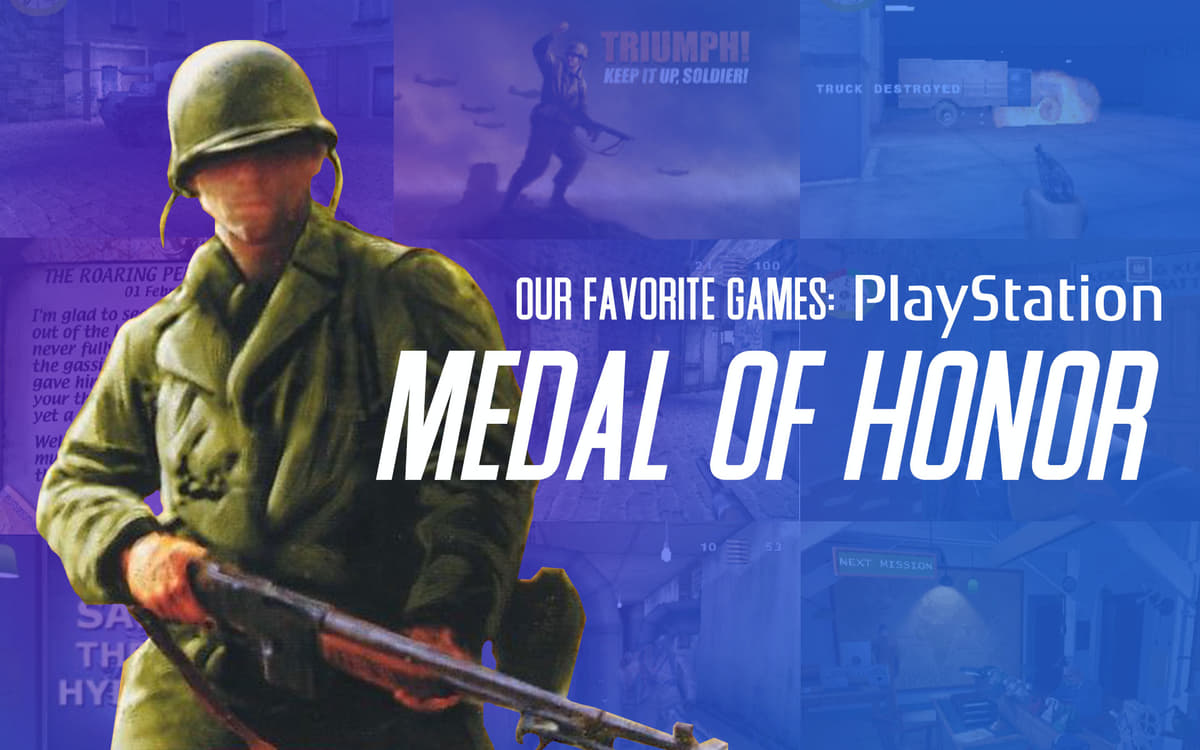
The year was 1999. First Person Shooters are slowly becoming the biggest genre in video games with Doom, Quake and Goldeneye 007 releasing to critical and commercial acclaim. The sky was the limit with their flights of fancy and desire to have the most exciting ADHD inducing moments in them. It was time for a breath of fresh air, a new game, to approach this genre from a more grounded and historical perspective. That game would release on November 10th, and it was Medal of Honor. This game would end up selling over 2.5 million copies and became a beloved game critically, sitting at ninety-two on Metacritic. This game was praised for its originality and became the launching pad for the sub-genre of World War II shooters that populated consoles for the next decade. Medal of Honor would develop into a series with dozens of games released through the early 2010s until getting a VR revival in 2020. It even helped spawn the Call of Duty franchise with Infinity Ward starting after several members of the studio 2015 Inc. left after making Medal of Honor: Allied Assault for PC due to them being unhappy with their contract at EA. This game was influential, and we are still feeling that today.
The development of this game was plagued with issues. It was originally a passion project for Steven Spielberg after becoming enamored with World War II history during the making of the blockbuster movie Saving Private Ryan. He had formed DreamWorks Interactive a few years prior in 1995 with Microsoft to develop video games for DreamWorks, the film company Spielberg helped to form in 1994. He saw the potential in video games right from the very start, helping to greenlight E.T. for the Atari 2600 and other games based on his movies like Jaws and Indiana Jones. Due to those games lack of quality, making this studio was a way for Steven to oversee the games more personally and make sure they were true to his vision, while also being fun to play. Around the time of making Saving Private Ryan, Steven was watching his son play Goldeneye for the Nintendo 64 and became enamored with it. He sought to replicate what Goldeneye was doing for his upcoming World War II game.
Originally, the game was thought to be too dated. Kids want lasers and aliens, not old rifles, and plain human enemies. Despite this, they were able to convince them to plunge ahead, even employing the same military advisor for the game that worked on Saving Private Ryan, Dale Dye. An early build was shown to various publishers, with Electronic Arts receiving it the best and signing on to publish it. The game ran into notable real-world trouble. On April 20th, 1999, the Columbine High School Massacre happened. With many in the media placing the blame on video games, DreamWorks thought of shelving the game for being poor taste or even exploitive. At the same time, the Congressional Medal of Honor Society was panning the game to disgrace the Medal of Honor the game was named after. The team had the best intentions, and they were able to show those to the Society, who ended up officially endorsing the game after experiencing what the game was trying to accomplish. After all those hurdles, the game released and after over 25 years, how does this game hold up?
The story, credited to Steven Spielberg and Peter Hirschmann, takes place during the later stages of WWII. You play Jimmy Patterson as a recruit to the OSS or Office of Strategic Services. The OSS was created in World War II to conduct espionage missions behind enemy lines. The game takes you to areas throughout occupied France where you sabotage various pieces of equipment and operations of Nazi Germany to assist the Allied Forces. Before each mission, you get a written journal from Manon Batiste, who is a member of the French Resistance, and it is filled with preambles and objectives to complete. She would eventually get her own game with the sequel, Medal of Honor Underground released in 2000.
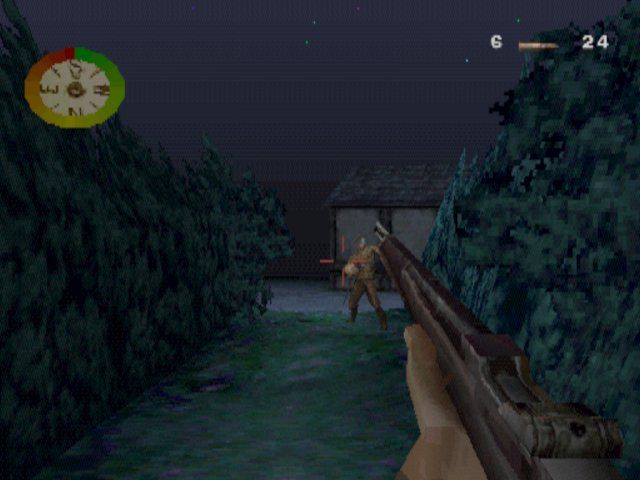
Graphically, the game looks good for PS1 standards. It goes for a fully 3D look and can pull it off without any major slowdown issues. The soundtrack was composed by Michael Giacchino, a man with an impressive list of credits too numerous to name here and he would go on to compose many more Medal of Honor games. The music is of a cinematic quality that would fit well with any film or even documentary of the time. The sound design is also solid even with the silly German accents on the Nazi enemies.

Most of the game is your standard first person shooter fare. You run through linear levels, and you take down any opposition in your way. You have a nice assortment of guns from the era including: M1 Garand, Thompson, MP40, BAR, Bazooka and more. You also get grenades, but you must select them like a gun to use them. An antiquated concept that thankfully is long gone. The controls for the game are interesting. You have DualShock support, but the default scheme does not utilize it properly. If you plan to play this game, I recommend switching to control scheme number 4. Here the game feels like a more modern shooter. I would not say it is Halo or Titanfall, but it works much better for us used to how shooters play nowadays. Credit the dev team for putting that forward thinking scheme in there.
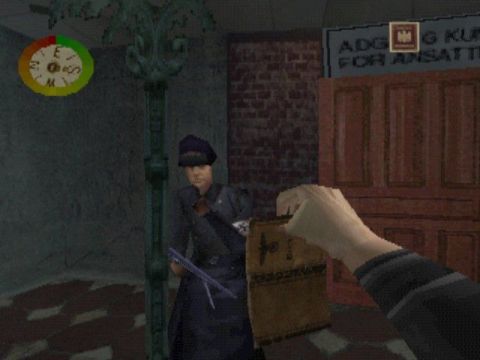
There are a few missions that stand out near the beginning of the game. Here, you go undercover dressed as an SS Officer and are meant to sneak around to accomplish your goals. These missions are managed well, but it is easy to completely mess it up and have to shoot your way through. You get a silenced pistol which can make this task not as mission ending as Metal Gear or Splinter Cell. The best part is you have your papers at the ready and when a Nazi asks you a question you can show them to them, and they let you go. It is silly and doesn't always work but it fits with the nature of the game, and I applaud them for trying something different.
The game took me a little over 6 hours to complete. There are 7 missions in total with 3 to 4 parts to each one. The pacing is great with not much down time. The environments range from open air forests and train stations to underground sewers, mine caves and laboratories. It ends up feeling more like a corridor shooter than anything but that was the best they could do with their resources. The downsides of the game are an incredibly short draw distance, lack of a checkpoint system and samey level design. The game is also lacking in the historical documentation that later games in the series would be abundant with. I applaud them for adding FMV of war footage of the time and having a documentary style presentation, but it is not as refined as it would become in later entries, which is potentially a limit of the technology they had.
Overall, this is a solid shooter for the PS1 and is part of that step ladder in the evolution of the genre. You go from Goldeneye to Medal of Honor to Alien Resurrection to Halo in terms of refining the genre on console. Sparking a whole sub-genre that dominated for a decade is also impressive and I was glad to see the game is still fun to play after all this time. Coming to this game for the first time, I did not think the game had aged all that much. Graphically it was on the older side, but it plays well, runs great and was a fun experience. The Medal of Honor series would continue from here and become iffy at best in terms of quality, but the first game still stands up as a classic FPS.