




Mina the Hollower | SuperPod Game Club
SuperPod Game Club dug deep into Mina the Hollower!

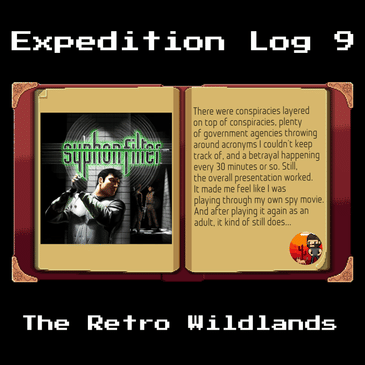
Was Syphon Filter really as good as we remember, or is nostalgia doing most of the heavy lifting?
In our latest entry in our Expedition Log, I revisit this PlayStation classic for the first time since childhood to find out. From Gabe Logan's globe-trotting spy adventure and memorable missions to the infamous taser, clunky controls, and trial-and-error gameplay, I break down what still holds up, what hasn't aged quite as well, and why this ambitious action game remains one of my favorite PlayStation memories.
Intro - 0:00
Syphon Filter - 3:48
Closing Gratitude - 31:00
Check out our website!
https://theretrowildlands.com/
The Retro Wildlands is part of the SuperPod Network of gaming podcasts and content! Check us out!
https://superpodnetwork.com/
Join the SuperPod Lounge Discord Server!
https://discord.com/invite/7zXbMvVQks
Follow the Retro Wildlands on Social Media!
Linktree: https://linktr.ee/retrowildlands
Check out the Retro Wildlands on YouTube!
https://www.youtube.com/@retrowildlands
Check out the Michigan Retro Game Expo!
https://www.mrgexpo.com/
[00:00:13] Greetings fellow travelers, vagrants, explorers, wildlanders, and welcome to the Retro Wildlands. My name is Nomad and this is my gaming podcast where I like to share my thoughts and experiences with a video game that I have discovered or rediscovered while roaming the gaming wildlands. Thank you for joining us around the campfire my friends. When I look back to when I was younger, I didn't realize how lucky I was to have a Sony
[00:00:41] PlayStation in my home until I was much older. I was spoiled in a way. My stepdad always made it a point to rent anything and everything that looked interesting so I got to dabble in a decent amount of games for the system. My listeners probably know my history with the original Resident Evil games. Metal Gear Solid was another PS1 classic that made a huge impact on me. When I bought my first ever music CD with my own money, which was Metallica's Master
[00:01:09] Puppets by the way, I played it while experiencing Boshido Blade. But one of the other games that I had the pleasure of playing through was Siphon Filter. Back then, I absolutely loved it. And it seemed to come at a perfect time when spy movies and video games following similar themes seemed pretty prevalent. In Siphon Filter, I spent countless hours sneaking through levels, experimenting with weapons, and,
[00:01:38] like just about everyone else, setting enemies on fire with the taser. But my friends, nostalgia can be a funny thing. A game that felt revolutionary when you were 12 years old doesn't always feel revolutionary 20 plus years later. I feel like as an adult, I am constantly asking the question, does this game hold up today? It's a valid question, and I love finding the answer for myself as I play a game again with
[00:02:07] a new, worldly perspective. I am excited to get into Siphon Filter today, but before we do, a quick one minute detour. I am so excited to be a featured guest at the Michigan Retro Game Expo happening October 29th in Kalamazoo, Michigan this year. It's shaping up to be a fantastic event, and I wanted to give the show a shout out with a message from retro game content creator, John Riggs. How are you feeling?
[00:02:36] You got John Riggs here, and I'd love to see you at the Michigan Retro Game Expo powered by GamePond. It's happening Saturday, August 29th at the Delta Hotels Kalamazoo Conference Center in Kalamazoo, Michigan. Shop from over 70 vendor tables full of video games and video game related items. Sign up to compete in gaming tournaments. Attend workshops and panels featuring celebrity YouTube guests and so much more. It's the Michigan Retro Game Expo powered by GamePond on Saturday, August 29th in Kalamazoo. For more information and to get your VIP tickets, go to mrgexpo.com. That's mrgexpo.com.
[00:03:06] Awesome. Thanks, John. And thank you for indulging me, my friends. I'm hoping I get a chance to see and meet a few of you at the show. Alright, back to Siphon Filter. Where was I? Oh yeah. So, after all these years, I decided to jump back into Siphon Filter and see how it holds up in 2026. As I looked at the game case and held the disc in my hand, all I could think was, is it still a great action game?
[00:03:35] Is it a relic of a bygone era? Or is the truth somewhere in the middle? Well, as it turns out, the answer is a bit of all three. Gaming Wildlands Expedition Entry 9. Game Siphon Filter. System. Sony PlayStation.
[00:04:06] Originally completed sometime in 1999.
[00:05:02] Back in the late 1990s, video games were emerging as more than just experiences where high-score chasing was the name of the game. There were stories to tell and developers were looking for ways to leverage technology to do that. While role-playing games have been around for a long time, this era of gaming saw an increase in cinematic storytelling. When I say this, I'm thinking of games like the original three Resident Evil titles, Silent Hill, Heart of Darkness probably has a place in there.
[00:05:31] But most notably, Metal Gear Solid which released in 1998, which was arguably the undisputed king of PS1 cinematic experiences. Games were evolving and storytelling was more prevalent than ever and it only made sense that the trend continued. But while spooky games and RPGs were the cinematic experiences that I experienced the most when I was a kid, there was another game that I was lucky enough to play that I had a pretty
[00:06:01] good time with. That game, of course, was Siphon Filter. I remember being fresh off the Metal Gear Solid experience and the thought of something similar absolutely interested me and my stepdad. I remember him renting Siphon Filter and we played it through to completion just over a couple nights. It was not Metal Gear Solid by any stretch, but it was very fun and dripping with that spy cinematic action that we were looking for.
[00:06:30] Fast forward to 2026. It wasn't until I decided to replay Siphon Filter as an adult that I decided to really look into this game's upbringing. What makes Siphon Filter especially interesting to me now, more today than back then, is the ambition behind it all. This game was originally developed by Eidetic, assuming I'm pronouncing that right, but I do know that Eidetic would eventually become the studio known as Bend Studio.
[00:07:00] The developers weren't content with making just another third-person shooter. They wanted to create something that felt like an interactive action movie, a game with cinematic camera work, fully voiced cutscenes, memorable set pieces, and a globe-trotting spy story that could stand alongside the blockbuster films of the late 90s. On PlayStation hardware, though, that was no small feat.
[00:07:27] While it didn't have the budget of some of its competition, Siphon Filter carved out its own identity through its blend of stealth, action, espionage, and puzzle solving, proving that there was room for another secret agent alongside the likes of James Bond and Solid Snake. In Siphon Filter, you play as Special Agent Gabe Logan, who, along with partner Leon Zing, is
[00:07:53] tasked with stopping an international terrorist named Eric Romer. What starts as a mission to stop a terrorist quickly evolves into something much bigger, involving government conspiracies, biological weapons, betrayals, and a deadly virus known as Siphon Filter? It's essentially a late 90s spy thriller. Think the aforementioned James Bond. Think Tom Clancy. Think Mission Impossible.
[00:08:22] Wrap all of those together and you've got a pretty good idea of what Siphon Filter was aiming for. It's easy to look at this game and think that it was just going for the Metal Gear Solid vibe, but that's not really the case. Comparisons between the two were inevitable, but rather than trying to be a slower, more methodical stealth game, Siphon Filter leaned much more heavily into action. And it wasn't just action for action's sake. Everything in Siphon Filter served a purpose.
[00:08:52] That distinction helped it stand apart and eventually turned it into one of PlayStation's most successful new franchises, spawning multiple sequels across the PlayStation, PSP, and PlayStation 2. Siphon Filter wasn't simply chasing trends, it found a sizable audience by putting its own spin on the spy thriller formula. As a kid, to me, this game felt incredibly cool.
[00:09:19] The story itself isn't particularly complicated by modern standards, but I remember being fascinated by it. Looking back now, I realize I probably didn't understand half of what was actually going on when I first played it, but there were conspiracies layered on top of conspiracies, plenty of government agencies throwing around acronyms I couldn't keep track of, and a betrayal happening every 30 minutes or so. Still, the overall presentation worked.
[00:09:47] It made me feel like I was playing through my own spy movie. And after playing it again as an adult, it kinda still does. When does the operation begin? Our intelligence within the FBI was not clear, but rumor's men are already inside the subway. Is it the same virus? Yes, enough to eliminate everyone within 100 miles or more. Procedure? Standard intercept and eliminate. These are from our contact inside Interpol.
[00:10:15] Jenkins' team is already on search and defuse. You are the trigger. I recognize Anton Girdou and Mara Aramov. Who's the other one? Pavel Kravic, Roma's communications expert. When you eliminate him, you'll also have to destroy his calm uplink. You'll be dropped into the strike zone when the firefight begins. You'll have an hour to find your targets and take them out. Do the locals know what they're dealing with? No.
[00:10:45] I'm setting a beacon. Wait. Leon, this one's different from the others. It has a shorter timer, and it looks... Okay, that's not virally. Too late. Wait. One thing that struck me while replaying Syphon Filter is how ambitious it was for its time.
[00:11:10] The game constantly moves from one location to another, and the variety of locations and even mission types is pretty impressive today. One minute you're navigating city streets. The next you're infiltrating military installations. Then you're exploring old cathedrals, dark laboratories, secret compounds, and snow-covered environments. The mission objectives also keep things fresh. You're not simply running from point A to point B shooting everything that moves in between.
[00:11:40] Sometimes you're rescuing hostages. Sometimes you're gathering information. Sometimes you're protecting civilians. And sometimes you're trying desperately to do all of that while not getting spotted. That variety gave the game a sense of scale that many PlayStation titles struggled to achieve, in my opinion. I also appreciated how the game encouraged patience. This is not a game that rewards recklessness.
[00:12:08] If you charge directly into danger, chances are you're going to come out the other side with several holes in your body that you didn't have before. Enemy accuracy can be brutal, especially in the later levels. Enemy accuracy can be beat me to the login points Every firefight, every encounter, it all matters. This is something that I had completely forgotten about.
[00:12:39] When you finish a level with low health you often start the next one in the same weakened state. If you die, you restart the level or you go to your last checkpoint with whatever health that you originally entered that space with. That meant resource management became incredibly important. Every armor pickup felt very, very valuable. But on the flip side, every mistake carried crushing weight.
[00:13:09] It's a pretty pointed design choice that we don't see very often anymore. And while it can be frustrating, it also creates a tension that really works in this game. You constantly feel like you're trying to survive rather than simply dominate the battlefield. And I love the approach that this game took with that. Speaking of resource management, we've got to talk about the weapon variety.
[00:13:36] From pistols and assault rifles to sniper rifles, grenades, explosives, and the legendary Taser. Siphon Filter's arsenal remains one of the game's strongest features. Different weapons encourage different approaches, giving levels some replay value and allowing players to experiment. And yes, the Taser is still hilarious and just as satisfying as it was back then.
[00:14:03] All you have to do is hook an enemy and keep your finger on the trigger. Sure, you can let go of the trigger when you're sure the enemy is incapacitated, but wouldn't it be more enjoyable to let them fry to the point that they catch fire? This is a question I am sure someone on the development team asked at one point. And I am so glad that someone said, yes. Yes, it would.
[00:15:09] Now, I know I usually do a pretty good job of setting up how exciting a game is or how innovative it was, but I feel the need now to address some things up front. Wall Siphon Filter is everything I just said it is. It is a game that absolutely shows its age and not everything is as smooth as I remember it to be. So that said, let's talk about some of the parts of Siphon Filter that stuck out to me as some sore spots.
[00:15:37] The first thing we have to discuss are the controls. These controls, man. Yikes. Now, I remember them being awkward and I knew there were going to be some pains as I replayed this today, but I do not remember them being this awkward. Even though I'm a product of the late 80s and early 90s, I've become quite accustomed to dual stick controls and smooth camera movement.
[00:16:05] Going back to a game designed before many of those standards existed was a bit of a system shock. The first hour or so of my experience, I felt like I was fighting to control Gabe more than I was fighting the terrorist. It wasn't all bad though, and eventually I did adjust, but getting to that point was not easy. If someone were playing Siphon Filter for the very first time today, the controls would be,
[00:16:31] without a doubt, the biggest hurdle to overcome, and the learning curve is very steep. Now, when we look at the game's combat, it only adds to that learning curve. Pressing your circle button to roll in order to avoid enemy fire is useful, but it isn't nearly as fluid as the dodge mechanics that were used today, so timing takes practice. Then, there's the first person aiming.
[00:16:58] While it was an impressive feature for a PlayStation game in 1999, manually lining up precise shots could feel surprisingly awkward now. You're constantly making small adjustments, fighting the sensitivity, and trying to keep the reticle steady long enough to land a headshot. And heaven help you if your target decides to move or otherwise twitch at any point. Thankfully, the lock-on system helps during most firefights, but whenever the game expects
[00:17:27] precise manual aim, you really start to feel the age of the controls. I did notice, however, that going into a manual aim always seems to put the reticle at head level, so lining up a headshot wasn't too terrible once you got used to that idea, really. The overall controls aren't impossible to master. They're just a reminder that this was a time when developers were still trying to figure out what controlling a 3D action game should actually feel like.
[00:17:58] Moving on from the controls, the camera can also be problematic. Most of the time, the camera worked just fine, but occasionally you'll find yourself wrestling with awkward angles, especially in tighter environments. And I guess going back to the controls really quick, while you're fidgeting with those, they did not make the experience all that much better either. Thankfully, I never found the wonky camera angles to be game-breaking or anything.
[00:18:26] Frustrating at times, sure, but never enough to make me quit or anything crazy like that. Oh, another thing that stood out is how little guidance the game provides. We are spoiled with our modern games today because modern games often make objectives crystal clear. You'll see highlighted pathways, there will be objective markers, brightly colored climbable surfaces, you know that yellow paint or yellow tape you'll see on every ledge.
[00:18:55] Siphon filter obviously doesn't do any of that. You'll often need to listen carefully to radio transmissions and mission briefings in order to know what you need to do next or where you have to go. Sure, the pause menu has a list of your objectives, but are they displayed on the map? No, no they're not. Now, I have to say this is more of an observation than a criticism. Back in the day, while there were subtle hints for the player, you were largely expected to
[00:19:25] figure things out on your own. There were several moments where I found myself wandering around, wondering exactly where I was supposed to go, or worse, backtracking to figure out what I missed so I could progress my mission. Now, this is going to sound really weird to say, but that was actually kind of refreshing for me sometimes. In an era where modern games try to handhold the player more than they probably should just to keep
[00:19:51] the pace of the game going, I appreciated being dropped into a world with a loose set of objectives and I was expected to figure it all out. It is still interesting for me to think about it though, especially because I do love playing modern games. In today's gaming landscape, I'm more impressed with a game that doesn't waste my time while I play or figure things out. There will be times in Syphon Filter though where your time
[00:20:15] will in fact be wasted. It's okay though, that's all part of the experience. I will say, as a way to prevent that wasted time, the least you can do is listen to your radio buddies. Traffic shows a yellow alert status. Be careful to avoid their patrols. If the base goes on alert, you won't have much time to complete your objectives. Check. Leon, rovers man have locked down the subway
[00:20:45] entrance security gates. You'll have to find the bypass switch. See if you can find a service elevator. Are you there? I'm here. I'm all right. Oh my god, Gabe. I thought you'd been killed. Not yet. Get on the wire and tell Benton that the subway is a decoy. The main bomb is somewhere else. Where's Romer? My video feeds are dead. Last visual had Romer moving towards level one, and Gerdue
[00:21:12] was moving through the main tunnel just beneath the street. The ramps down here have collapsed. I'll have to find another way up. Since we're on the topic of looking at the old and how it translates to modern games today, one thing modern players might struggle with is how much of Syphon Filter
[00:21:36] relies on trial and error. This is especially noticeable during stealth-focused missions. The way this game works is you're often expected to learn through failure. As you go throughout your journey, you will get spotted. You will fail objectives. You'll discover that one particular route doesn't work. Then you'll try again. And again. And again.
[00:22:03] At first, I thought this might bother me more than it actually did. Back in the day when I was a kid, I had nothing but time. Today, I might have a few hours of game time in the evening after work if I'm lucky. And just the thought of trial and error makes my chest hurt. But the more I played, the more I remembered that this was just simply how games were designed back then and that this was part of the
[00:22:29] experience and it's really not negotiable. The developers expected players to replay levels, experiment a little bit, and they expected you to learn through repetition. Even though this was the late 90s, that old school gaming philosophy from the old NES days wasn't completely dead yet. Once I detached and accepted the fact that this was what the experience was largely going to be,
[00:22:55] I found myself enjoying it quite a bit more. Like I mentioned previously, it was kind of refreshing looking at the game through that sort of a lens. Siphon Filter doesn't hold your hand. It expects you to learn its rules and adapt. Once I did this, I felt a genuine sense of accomplishment when I completed a mission. More than once I silently pumped my fist in the air, celebrating my victory as a highly trained
[00:23:21] special government agent. Or maybe I was celebrating barely making it out of the experience alive. Either way, it was an awesome feeling. That said, there are moments where the line between challenging and frustrating becomes very, very thin. And that can definitely test your patience.
[00:23:43] You're supposed to provide cover for that agent. We're getting a bomb. Shooting it will set it off. I've lost contact with Logan. Set up viral containment protocols and contact FEMA. Tell CBDC I failed. Gabe, don't destroy the dish. We needed to find their trigger man.
[00:24:12] Gabe, we needed to access information in that COM array. Now we can't find the trigger man.
[00:24:23] I'll pay you. No! Now I know I keep flip flopping back and forth between what I liked and what I
[00:24:51] didn't, so I apologize for the tonal whiplash. But before we wrap this discussion up, I have to complain about one more thing. When I set off to replay the game, I knew there was going to be a couple parts in the game that I would absolutely dread. And when I got to them, I still dreaded them. Those parts were the escort missions.
[00:25:15] I genuinely believe that Siphon Filter contains some of the reasons escort missions developed such a bad reputation. Any time a mission required protecting someone else, especially if I had to guide that someone else somewhere and follow after them or hope that they followed after me, my stress levels immediately increased. AI wasn't exactly known for making intelligent decisions back
[00:25:40] in 1999, and Siphon Filter certainly wasn't any different. There were several moments where I felt like my objective wasn't defeating terrorists. It was preventing the person that I was protecting from making terrible life decisions. Those missions, or at least those moments within those missions, remain my least favorite parts of the game. Now granted, I might be embellishing just a little, but there were times the person that I was escorting would run out right in front of me to meet enemies
[00:26:10] head on, just to kneel down and then take their bullets in the face. Or, my favorite was when the person I was escorting would run right in front of me while I was unloading fully automatic gunfire into the enemy. As one would expect, that was a very quick trip to the game over screen. If there's anything positive that I can say, it's that these missions or objectives were usually
[00:26:35] infrequent. But when it's time to protect our allies, you better be on your A-game and be ready to take a bullet or two for them. Or you're going to find yourself back at your last checkpoint.
[00:27:19] NPC 2 So after replaying Syphon Filter for the first time in decades, where do I land? Well, I know there was a lot more negativity in this review than I was expecting, but I have to say, I really still like this game.
[00:27:49] But I like it for different reasons now than I did when I was younger. As a kid, I saw a cool spy game with exciting missions, lots of weapons, and a story that made me feel like a highly trained secret agent. And all of it worked for me when I was a kid because I was still chasing that Metal Gear Solid feeling while looking for something fresh. As an adult, though, I can see all the flaws and imperfections much more clearly.
[00:28:18] The controls, they're clunky. The camera, it can be frustrating. There's also a lot of that trial and error that I talked about. Objectives aren't always clearly communicated, and there's some mission design choices that would never survive a modern focus test. Yet, despite all of that, I still had a really good time. What stands out the most to me is Siphon Filter's ambition.
[00:28:46] This was a PlayStation game trying to deliver a cinematic spy thriller with large levels, varied objectives, stealth mechanics, action sequences, and a conspiracy-filled story that was much more engaging now that I'm older and that I can understand a little bit better. And for the most part, the game succeeded. It is, however, absolutely a product of its time. But that isn't necessarily a bad thing.
[00:29:15] Sometimes revisiting older games reminds us how much the industry has evolved. Other times, it reminds us that some ideas were worth preserving. Siphon Filter did its best to give players freedom. All the while, it demanded your patience. It respected your ability to learn through experimentation, and it found a way to be memorable and fun despite itself.
[00:29:42] At the end of the day, I think nostalgia certainly helped bring me back to Siphon Filter and to Gabe Logan's adventure. I really want to go back and play through all of the other titles in the series now that I've gotten my feet wet again. But nostalgia alone isn't what kept me playing. Beneath the dated controls and aging design is a genuinely enjoyable action game that still has plenty to offer.
[00:30:08] And after spending time with it again, I find myself hoping again that one day, Sony gives this series another chance. Whether that's a full-on remake, a remaster, or an entirely new entry, I would love to see Gabe Logan return. Because even with all of its flaws, Siphon Filter remains one of the most memorable action games of the original PlayStation era.
[00:30:36] And that is a legacy worth preserving and experiencing again today. And with that, we close the book on our ninth entry into the Expedition Log, my friends.
[00:31:04] This has been the Retro Wildlands Expedition Log number 9, Siphon Filter. Thank you very much for tuning into the show today. Before we put out the campfire and head our separate ways, do not forget to give the Retro Wildlands a follow on social media and make sure you subscribe to the show as well.
[00:31:25] Our website, theretrowildlands.com, is also the place you want to be for the latest content as well as our growing catalog of podcast episodes and blog entries. You can sign up for a free account on our website, which will give you the ability to leave comments on pretty much everything. And it's a great way to interact with me, the show, and the community. The Retro Wildlands is also part of the SuperPod Network, home of some other awesome video game podcasts and other gaming content.
[00:31:54] And you can check all of that out and more by heading over to superpodnetwork.com. Thank you all again for hanging out with me today. Normally, this is the part of the show where I give you a sneak peek as to what's coming up next. But to be completely honest with you all, I have a few things in the works. But at the time of this recording, I am not 100% sure which one I'm going to see to completion. Long-time listeners know that despite my best efforts, it's been very hard for me to remain consistent with episodes.
[00:32:24] And even though I made a pretty decent plan for content this year and delivered, at least in the beginning, too many things have come up that have taken priority for me this year. I'll probably get into it somewhere down the road, but I will say that I'm working through games like Tenchu Stealth Assassins on the PS1, Star Fox 64, which I'm eager to go back and play now that Star Fox on the Switch 2 is a thing, RC Pro-Am on the original Nintendo is another one I've been dinking around with,
[00:32:52] and I'd like to do a re-explored episode on Teenage Mutant Ninja Turtles, Turtles in Time at some point. While I've been trying to make time for all of those and more, I am happy to report that I'm still posting written game reviews over on our website, so there's still a lot coming up and a lot to look forward to. Even though things are busy for me now, I am always around on social media, so follow me on your favorite social platform for the latest from me.
[00:33:18] I am sure I will see you sooner rather than later, and thank you again for being here, my friend. I cannot wait to see you again when we gather around the campfire and add yet another entry into our gaming expedition log. Until then, my friends, my name is Nomad, and you can find me... Roaming the Retro Wildlands.
[00:34:37] Well done, my dear. Well done.
Help us keep the site AD-FREE by donating as little as $1💸

This time I am joined by Youtuber Shnickerman to discuss Sledgehammer's return to the beginning of the series with Call of Duty: WWII. Follow me on Social Media! https://bsky.app/profile/thrak.bsky.so...
Top-down racers aren't a common sight on Neo Geo, so how does Thrash Rally fare? The guys dare to find out. Catch us online at https://neogeogo.show ★ Buy Us a Coffee ★ Follow us on Bluesky! Podcast:...
On this episode of the Gaming And Collecting Podcast Bill and Alex return to talk about the Super Mario Galaxy Movie, giving there thoughts on it. Follow the Gaming And Collecting Podcast on all of ou...
Andre and Steve are back at the Summer RPG Anime Festival with Princess Minerva, the aggressively horny OAV prequel to the aggressively horny RPG on PC-98, PC Engine CD, and Super Famicom. We didn't g...
Life has been punching us in the face and too much news happened so here's an episode catching up on all the crazy summer 2026 gaming news. Watch Jake stream on Twitch! https://www.twitch.tv/chipdip18...
On this episode of The 3DO Experience we return to another post 3DO console game with Warriors of Might and Magic, 3DO's second attempt at the series! Check Out Call of Duty: Thrak Ops: https://su...
On this episode of Geek Addicts Bill and Matt take some time to share there respective top 10 comic book film lists! Follow all things G&C Podcast Network here: https://linktr.ee/Thebarberwhogames Int...
Grant swings by to give everyone an update on why there has not been an podcast episode in a while. Superpod Network: superpodnetwork.com/podcast/tommy-and-grant-go-podcasting Blue Sky : tommyandgrant...
Video game expert Tommy is joined by esteemed colleague and guest Aaron to analyze Elden Ring. Creators & Guests Tommy Reinking - Host Aaron Klaassen - Guest Website: https://videogamesanalyzed.tr...
SuperPod Game Club dug deep into Mina the Hollower!
SuperPod Game Club tried Earthworm Jim 3D
Bill is a huge fan of The Sims on GBA. Read and see why!